Home Blog Page 2

The 12 Houses in Vedic Astrology

0

You’ve probably heard of the twelve houses in astrology — maybe in passing, maybe in-depth — but do you really know what they mean? Not in the copy-paste horoscope way, but as keys to your karmic blueprint. Let’s explore them properly. This isn’t just astrology; this is your celestial instruction manual.

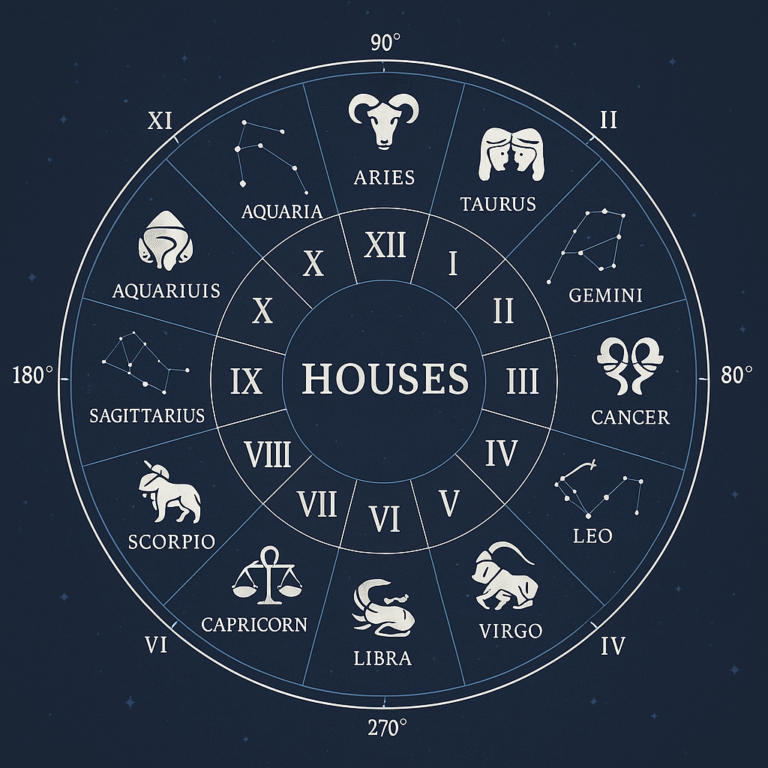
Imagine the sky at the moment of your birth. Now divide that 360° celestial dome into twelve segments — these are the twelve houses, or bhavas. Each house is a field of experience, a lens through which your karma, psychology, desires, and dharma unfold. These houses don’t just represent things like wealth or marriage — they represent your relationship with those things, your karmic entanglement with them, and the lessons they are designed to teach you.

Now, here’s the twist. These houses remain fixed in your chart, but the planets keep moving. That’s where transits and dasha periods bring your chart alive — like switches turning on and off across different sectors of your life. But before we get to that, let’s first decode the meaning of each house.

The 12 Houses — Meaning, Rashi, and Significance

1st House – The Self (Aries/Mars)

This is the house of identity — your body, appearance, vitality, and overall temperament. It’s your starting point. When Mars rules here, you get directness, energy, sometimes aggression. When this house is afflicted, confidence falters.

2nd House – Wealth & Speech (Taurus/Venus)

This house rules accumulated wealthspeech, and family values. Venus here makes you eloquent, sensual, and fond of comfort. Malefics here? You might talk too sharply or face instability in finances.

3rd House – Courage & Siblings (Gemini/Mercury)

A house of effortwillpower, and communication. It also shows younger siblings, travel, and self-made success. Mercury here brings brilliance in writing and speaking. A strong 3rd makes you a doer.

4th House – Home & Emotions (Cancer/Moon)

This house governs your motheremotional core, and landed property. A strong Moon here makes for deep emotional intelligence. A disturbed 4th? Inner peace suffers.

5th House – Creativity & Intelligence (Leo/Sun)

This is the house of childrenintellectpast-life merit, and romance. The Sun ruling here enhances creativity. This is also the house of mantra and purva punya — past-life good karma.

6th House – Enemies, Health & Service (Virgo/Mercury)

This house shows strugglesdebtsdisease, and discipline. A malefic here isn’t always bad — it gives resilience. Think of this house as your battlefield. Overcome it, and you rise.

7th House – Relationships & Contracts (Libra/Venus)

This house is marriagebusiness partnerships, and long-term bonds. It also represents the ‘other’ in your life. Venus here beautifies relationships. But afflictions can make partnerships karmically intense.

8th House – Death, Secrets & Transformation (Scorpio/Mars)

The most misunderstood house. It governs death, rebirth, hidden knowledge, tantra, and sudden events. Mars here makes you a seeker of depth, a truth digger. But this house also shows inherited karma.

9th House – Dharma, Luck & Higher Wisdom (Sagittarius/Jupiter)

This is your guruethicsreligion, and long-distance journeys. Jupiter here is a blessing. It’s also your house of fortune (bhagya). Strong 9th = divine protection.

10th House – Career & Karma (Capricorn/Saturn)

This house reveals your public imageprofession, and actions in the world. It’s Saturn’s house of disciplined success. A strong 10th gives you legacy, leadership, and responsibility.

11th House – Gains & Desires (Aquarius/Saturn)

Here lies your networkambitions, and financial gains. It’s the house of wish-fulfillment. When active, it shows rewards for your karma — the fruits, the payoffs.

12th House – Moksha, Isolation & Loss (Pisces/Jupiter)

Often feared, this house is actually deeply spiritual. It governs dreamsasylumsforeign landsbed pleasures, and ultimately liberation. Jupiter here gives inward vision. But material attachments may suffer.

Houses in Motion: Transits and Dashas

Houses don’t exist in isolation. When planets transit over houses, they light them up — sometimes gently, sometimes explosively. But even more critical is your dasha (planetary period). The dasha lord activates the houses it owns and occupies.

For example, if you’re in a Venus dasha and Venus owns your 7th and sits in the 11th, expect partnerships and gains to take center stage.

Transits are like weather. Dashas are like climate.

A Saturn transit over your 4th may bring home-related trials. But if you’re in a Jupiter dasha, and Jupiter is your 4th lord sitting in the 10th, that same transit may manifest as buying property after delays.

Combinations to Know

Basic Ones:

  • 5th lord in 10th: Creativity leads to career success. Actors, performers, or teachers.
  • 2nd lord in 11th: Strong money gains through community or business.
  • 7th lord in 1st: Partner has major impact on life; marriage transforms identity.

Advanced Yogas:

  • Dharma-Karma Adhipati Yoga: When lords of the 9th and 10th houses associate. Sign of great impact and spiritualized leadership.
  • Viparita Raja Yoga: Malefics in 6th, 8th, or 12th houses can generate strength from suffering, bringing unexpected rise.
  • Parivartana Yoga: When two house lords exchange signs — they create a mutual reinforcement.

What Most Modern Astrologers Miss

Here’s a hard truth: superficial chart readings miss the point. Real Vedic astrology requires:

  • Divisional charts (D9, D10, D7…)
  • Dasha analysis
  • Transits
  • Ashtakavarga, yogas, and even shadbala

Without this depth, predictions are vague or wrong. And astrology loses its credibility.

The Chart Is Not the Destiny

Houses show karma, but you show how you meet it. The 10th may promise career, but without action? Nothing. The 5th may promise intelligence, but without wisdom? Waste.

These twelve houses aren’t just chart segments — they are stages of evolution. Each one tests a part of you, teaches you a different language of the soul. Master them, and the cosmos begins to whisper secrets most never hear.

And that’s when astrology stops being prediction — and starts becoming vision.
Saturn Doesn’t Care It’s Saturday: The Lost Science of Astrology

0

I. So, You Think Saturday Belongs to Saturn?

Let’s start with something most of us accept without question: Saturday is “Shani’s Day,” right? You’ll hear it everywhere – from astrologers, family elders, even spiritual teachers: be careful on Saturday, it’s ruled by Saturn (Shani Dev), the bringer of karmic lessons.

But here’s the problem — Saturn doesn’t give a damn that it’s Saturday on your phone.

This belief is based on a calendar system that has nothing to do with Vedic or astronomical astrology. The Gregorian calendar, the one most of us use daily, is a solar civil calendar invented by the Catholic Church in 1582, not a spiritual or cosmic system. The Vedic system, by contrast, is based on the Moon, Nakshatras (lunar mansions), planetary transits, and sunrise-to-sunrise measurements.

So when someone says “do this on Saturday for Shani,” they’re usually looking at the wrong calendar. In Vedic astrology, the true “Shani Day” is when Saturn actually exerts influence — for instance, through a transit (gochar), Saturn return, sade-sati, or Saturn Mahadasha.

The first red flag in modern astrology is that we’ve outsourced cosmic timing to colonial timekeeping.


II. The Gregorian Calendar: Origins and Intent

The calendar you use today was never designed to align you with the stars. It was created to fix a liturgical problem.

In 1582, Pope Gregory XIII reformed the Julian calendar because it had drifted away from the spring equinox, making Easter celebrations inconsistent. His solution was to:

  • Drop 10 days from the calendar
  • Adjust leap year rules to correct for drift
  • Create a purely solar calendar (i.e., based only on the Earth’s rotation around the Sun)

The Gregorian calendar has no connection to lunar phases, planetary hours, or the sidereal zodiac. It’s useful for civil coordination, banking, and appointments — not for spirituality.

Yet this calendar has become the default for nearly everything in India too — thanks to British colonialism.


III. Calendar Colonialism in India: The Time Takeover

When the British Raj standardized administration, it required a common time system. So they imported the Gregorian calendar. Over time, even religious institutions started scheduling by this foreign calendar, simply for convenience.

After Independence, a reform attempt was made. In 1952, Dr. Meghnad Saha, an astrophysicist, led India’s Calendar Reform Committee. The goal? Create an Indian National Calendar to unify the dozens of regional Hindu calendars.

What they came up with — the Saka calendar — was Indian in name, but still borrowed structure from the Gregorian model. It began around March 22 each year, had 12 months, and followed the tropical solar cycle.

It was a political compromise, not a cosmic recalibration.

Today, the Indian government uses both the Gregorian and Saka calendars, while most people continue using the Gregorian exclusively — even for astrology.


IV. Lost in Time: The Vedic Calendar System

The original Vedic system wasn’t designed to align with Christian holidays or the financial quarter. It was built to sync your actions with celestial reality.

The building blocks of this system are:

  • Tithis – Lunar days
  • Nakshatras – 27 lunar constellations, each 13°20′ wide
  • Pakshas – Bright (waxing) and dark (waning) lunar fortnights
  • Masa – Lunar months
  • Varas – Planetary weekdays, determined by the lord of the day at sunrise
  • Panchang – The fivefold calendar that includes tithi, vara, nakshatra, yoga, and karana

Every religious ritual, fast, and even war in ancient India was conducted only after checking the Panchang.

Using the Gregorian calendar for astrology is like using a spoon to chop wood — it’s not just ineffective, it’s the wrong tool.


V. Why Diwali and Holi Still Use the Hindu Calendar

Here’s a clue: despite the Gregorian takeover, India’s biggest festivals — Diwali, Holi, Janmashtami, Navaratri — are still scheduled by the Hindu calendar.

Why?

Because these festivals are based on astronomical phenomena:

  • Diwali falls on the Amavasya (new moon) in the month of Kartika
  • Holi is on the Purnima (full moon) of Phalguna
  • Navaratri starts on Pratipada (first lunar day) after the new moon

If these events were dated on the Gregorian calendar, they’d quickly lose their energetic alignment. Yet strangely, astrologers still use Gregorian days like “Saturday” to recommend rituals.

That’s like anchoring a ship with rope in mid-air.


VI. The Myth of Monday Fasts and One-Size Rituals

“Keep a fast every Monday to please Shiva.”

“Do Hanuman puja every Tuesday.”

These rituals are deeply embedded in Indian culture. But the astrological rationale is rarely checked.

For example, fasting on Monday to “strengthen the Moon” only makes sense if your personal chart indicates a weak Moon — and if that fast is done during a proper Nakshatratithi, and with astrological consultation.

Otherwise? It’s ritual guesswork. People fast religiously, nothing changes, and then they blame astrology.

This is not the failure of astrology. It’s the failure of misapplied calendar systems, superficial advice, and outdated data.


VII. The Scientific Breakdown: Why Modern Astrology Fails

1. Precession of the Equinoxes

The Earth wobbles on its axis — a phenomenon known as precession. Over time, the stars shift relative to our position on Earth. The Vedic zodiac is sidereal, meaning it is star-based, but most calculations were fixed thousands of years ago.

As of today, there’s a 23–24° drift between the tropical (Western) and sidereal systems. If an astrologer isn’t using updated sidereal calculations, their predictions can be off by an entire sign.

2. Outdated Ephemeris vs. NASA-grade Data

An ephemeris is a table that tells you where planets are at any given time. Traditional astrologers use printed or outdated software-generated ephemerides — some based on planetary models from the 19th century.

NASA’s JPL DE ephemerides (used for space missions) are accurate to within milliseconds and arcseconds. Compare that to the up to 2° margin of error in many Vedic astrology tables.

That’s an error margin of nearly 7% in angular position, which is the difference between saying Mars is in Aries or Taurus.

In astrology, that’s catastrophic.

3. Fixed Weekdays vs. Planetary Hours

The Gregorian day begins at midnight, but in Vedic time, the planetary day starts at sunrise. So if you do a Shani puja on “Saturday” morning — but Shani hora starts only after 10 AM — your ritual may miss the actual energetic window.

Also, planetary hours (horas) change daily. A real astrologer checks which planet is dominant at that hour.

Almost no one does this today. That’s why most rituals are astrologically hollow.


VIII. Human Error: Astrology Isn’t Broken, It’s Misused

Astrology isn’t random. It’s just misapplied.

  • People use Western signs for Indian charts
  • Use solar months when the chart is lunar-based
  • Assign attributes based on tithi but ignore nakshatra
  • Perform rituals on “auspicious days” based on media or calendar apps that don’t show actual Panchang data

The result? Mismatch. Disappointment. Blame.

It’s like trying to do Ayurvedic diagnosis using allopathic instruments.


IX. Reclaiming Our Cosmic Compass

So what do we do with all this?

  1. Use the Panchang, not just the calendar app. Learn what tithi, nakshatra, and planetary hora really mean.
  2. Update ephemerides. Use NASA-based data or software aligned with the Swiss Ephemeris or JPL.
  3. Stop blindly fasting. Personalize your remedies based on a proper chart reading.
  4. Don’t fear the planets. Understand them. Align with them.
  5. Practice sadhana. Rituals done with purity and timing matter. But so do intent and consciousness.
  6. Remember the limits. Even great astrologers cannot override divine will. Treat astrology as a compass — not a contract.

X. Beyond Saturday

Next time someone tells you “Saturday is dangerous because of Shani,” ask:

  • What’s Shani’s current Gochar (transit)?
  • What house is he in for your lagna (ascendant)?
  • Is your Sade Sati active?
  • Did your astrologer check your Moon sign before scaring you?

If not, then you’re reacting to a label — not to a cosmic truth.

Astrology, like medicine or music, requires precision, intuition, and discipline. It is not broken. It’s just been tamed by colonizers, diluted by calendars, and hollowed by commercialization.

But you can revive it. All it takes is a return to truthful timing, and a willingness to move beyond the illusion that time begins at midnight.

Because honestly, Saturn doesn’t care it’s Saturday.
But he does care if you understand the deeper structure of time.

Franz Kafka: The Prophet of Inner Pain, Who Whispered the Truth Before the World Was Ready


Writers give us stories. Franz Kafka gave us mirrors. But his mirrors never reflected our faces — they showed our souls.

Born in 1883 Prague, Kafka was a Jewish man in a Catholic city, a German speaker in a Slavic land, and a spiritual being in a material world. He worked quietly as an insurance officer by day and transformed into a haunting literary voice by night — creating stories that feel more real today than when they were first written.

A century before hashtags and self-help books, Kafka touched truths that only sages dared speak of — suffering, silence, injustice, and the desperate cry of the human heart in an indifferent world. But what most people still overlook is this: Kafka wasn’t just a literary figure. He was a deeply ethical, spiritually-tuned soul — possibly a misunderstood modern rishi in a black European overcoat.


Kafka’s World: A Dream Gone Cold

His most iconic works are like koans — riddles with no resolution:

  • In The Trial, a man is prosecuted without knowing his crime.
  • In The Castle, a man tries endlessly to access a system that won’t let him in.
  • In The Metamorphosis, Gregor Samsa wakes up as a giant insect — and his family abandons him.

These aren’t just absurd tales. They’re existential truths dressed in fiction. Franz Kafka showed us what it feels like to live in a system that doesn’t explain, doesn’t care, and doesn’t stop. He named the quiet suffering that modern people endure but cannot articulate.

But behind this psychological darkness, there was something rare — a light that came not from the West, but from the East.


Kafka the Vegetarian: A Man of Deep Moral Empathy

Here’s a little-known fact that deserves far more recognition: Kafka was a vegetarian.

Not out of diet trends. Not out of religion.
But out of sheer, radical empathy.

In a moment of poetic clarity, Kafka once stood before an aquarium and said:

“Now I can look at you in peace; I don’t eat you anymore.”

This quote is recorded by his friend Max Brod and reveals something precious — that Kafka didn’t just write about alienation. He resisted causing it. Even toward animals.

In an era with no Instagram, no animal rights movements, no vegan influencers, he arrived — all on his own — at a truth ancient India has known for millennia:


Kafka and the Eastern Spirit

Kafka never visited India. He never quoted the Vedas. But his soul was already swimming in Upanishadic waters.

His letters to Milena, his fiction, and even his diary entries show a man longing to renounce, to escape the ego, to melt into something higher than the madness of modernity.

“I have hardly anything in common with myself…”
— Kafka

This sounds eerily like the Vedantic concept of the illusory ego (Ahamkara), which veils the true Self (Atman). Like a sannyasi trapped in a bureaucrat’s body, Kafka tried to surrender the “I” — not through chants, but through literature.

In A Report to an Academy, he even writes from the mind of an ape becoming human — a parable on assimilation, suffering, and the violence of civilization. That’s not storytelling — that’s philosophy wearing a monkey mask.

Kafka’s emotional journey echoes Buddhist and Hindu truths:

  • The inevitability of Dukkha (suffering)
  • The absurdity of karmic entanglement
  • The longing for moksha (liberation) from systems and selves

Kafka and the Lost Doll: A True Story of Tender Imagination

In the final year of his life, Kafka encountered a little girl crying in Berlin’s Steglitz Park—she had lost her beloved doll. Instead of dismissing her sorrow, Kafka gently told her the doll had gone on a journey and left him a letter. For weeks, he returned to the park daily with beautifully written “letters from the doll,” describing her travels, new friends, and reflections on change. Each letter helped the girl process her grief with comfort and wonder. Eventually, Kafka gifted her a new doll, saying, “She may not look the same, but she has the same heart.” This tender real-life episode, witnessed by his partner Dora Diamant, reveals a Kafka few know—a man of immense empathy, using fiction not to escape reality, but to lovingly heal it. In a world of grief, he gifted a child the most powerful thing a writer can: hope woven through story.

A Writer Who Burned With Quiet Fire

He never chased recognition. In fact, he asked Max Brod to burn all his work after his death. Brod refused — giving the world not just stories, but scriptures of modern suffering.

Kafka’s greatness lies not in literary devices, but in the moral sincerity of his soul. He saw the absurdity of life and didn’t blink. He walked into the fire of confusion and came out with ash-shaped truth.

And yet, he laughed. Max Brod recounts how Kafka would laugh aloud while reading The Trial. He wasn’t just brooding — he was laughing at the cosmic joke that life sometimes is.

That’s what makes him timeless. That’s what makes him Indian in essence, if not by passport.


Why Kafka Still Heals Us

You read Kafka, and you don’t find answers.
But you find a companion — someone who walks beside your unspoken questions.

  • If you’ve ever felt unseen — he’s writing you.
  • If you’ve ever been crushed by a system — he’s drawing you.
  • If you’ve longed for a simpler, more peaceful life — he’s already bowed before that same flame.

He did not label his beliefs. He lived them. In a world obsessed with categories, Kafka chose compassion, simplicity, and the hard truths no one wanted to hear.


🌸 A Final Whisper

Franz Kafka may not have known Sanskrit. But if you listen closely, you’ll hear echoes of Bhagavad Gita, Buddha, and Vedanta in every metaphor.

He was a quiet sage in a loud world.
A vegetarian in a meat-eating empire.
A truth-seeker in a century of lies.

In today’s age of noise and branding, Kafka’s voice is not outdated — it’s pure.

Because long before algorithms and influencers, one man in Prague silently showed us that the only real revolution is this:

To live gently. To think deeply. And to walk away from violence — in every form.


Anupurti Srivastava: The Soulful Symphony of Words, Voice, and Expression

Some artists create. Some artists perform. And then there are artists like Anupurti Srivastava, who do both with such effortless grace that their very presence feels like poetry in motion. A woman of many talents—writer, singer, RJ, Digital Marketer, Generative AI Professional and also an accomplished creative strategist—she is a living testament to what happens when passion meets purpose.

In a world obsessed with fleeting trends, Anupurti is a soul-driven artist, someone who thrives on authenticity, depth, and an unwavering commitment to her craft. Her journey isn’t about overnight fame but about crafting a legacy—one melody, one story, and one powerful voice at a time.


A Mind that Weaves Stories, A Voice that Sings Emotions

Some people find their art, but Anupurti was born into hers. Every word she writes, every note she sings, and every role she plays is an extension of her soul. She doesn’t just create content; she crafts experiences that stay with the audience long after the moment has passed.

Her voice isn’t just a sound—it’s a feeling. Deep, resonant, and expressive, it carries the weight of emotions that words alone sometimes cannot. Whether it’s poetry that tugs at your heartstrings, music that soothes your soul, or acting that makes you believe in the power of storytelling, Anupurti embodies art in its purest form.


The Journey: From Dreams to Reality

Anupurti’s story isn’t just about talent—it’s about courage. Growing up, she wasn’t just another dreamer; she was a doer. She believed in her voice, her words, and the undeniable fire within her to turn passion into profession.

Her career has been a beautiful blend of corporate strategy and creative artistry. As Deputy Manager at Fever FM, she brings brands to life with her exceptional copywriting, voice expertise, and strategic marketing vision. But despite being a powerhouse in the corporate world, she never let go of the artist within her.

She has performed, written, and created on platforms that matter—whether it’s through her poetry, music, or thought-provoking narratives. She’s a linguistic chameleon, seamlessly switching between Hindi, English, Urdu, and Punjabi, making her work relatable to diverse audiences.


Anupurti’s Artistic Universe: A Symphony of Talent

🎶 The Music That Moves You

Music isn’t just about sound; it’s about soul—and Anupurti’s voice carries both. Her singing is heartfelt, raw, and deeply connected to the emotions she wishes to convey. Whether it’s a soft, soothing melody or an intense musical narrative, she brings a rare depth to every piece she sings. Goddess Saraswati resides in her soul, not just her throat.

📜 The Poetry That Speaks Volumes

Her words aren’t just written; they are felt. A poet at heart, Anupurti captures emotions most people struggle to express. Her work isn’t about fancy rhymes or ornamental phrases—it’s real, unfiltered, and painfully beautiful.

Her social media platforms, like Instagram (@the_soul_route), are a sanctuary for those who seek solace in words. Her poetry is like a quiet conversation with the soul—gentle yet powerful, intimate yet universal.

The Actress Who Becomes Her Characters

Acting isn’t just about delivering lines; it’s about breathing life into them—and Anupurti does this flawlessly. Whether it’s a theatrical performance, a short film, or a storytelling piece, she has the rare ability to dissolve into her characters, making the audience forget they’re watching a performance.


A Sigma Woman Who Walks Her Own Path

In a world that constantly tells you to fit in, Anupurti stands tall as a nonconformist. She identifies as a Sigma Woman—independent, strong-willed, and unapologetically herself. She isn’t chasing the spotlight; the spotlight finds her because of her authenticity.

She’s also a deep thinker, an observer of life, and someone who prefers substance over superficiality. Her work reflects that—whether it’s her evocative poetry, her immersive music, or her compelling performances, there’s always an element of truth in it.


The Future: A Canvas Yet to Be Painted

For someone like Anupurti Srivastava, there are no limits—only possibilities. Whether it’s music, writing, acting, or voice artistry, she continues to push boundaries, inspiring others to pursue their own artistic calling.

Her future is as unpredictable as art itself—she could release a song that becomes the anthem of self-expression, act in a film that redefines storytelling, or write a piece that becomes a modern-day classic.

What’s certain is this: Anupurti is not just an artist; she is Art itself. Limitless.

And the world is lucky to witness it.

Where Is Justice for Twinkle Sharma? Six Years On, India Awaits Accountability

0

There are stories that shake a nation. Some fade away with time, but a few leave behind a silence too loud to ignore. Such is the case of Twinkle Sharma, a 2½‑year‑old from Tappal, Aligarh, whose life was tragically cut short in May 2019. Now, in July 2025, India still waits for the final judgment.

The Fateful Days

On May 30, 2019, Twinkle disappeared while playing outside her home. Her body was recovered on June 2, at a local garbage site. Preliminary reports confirmed repeated physical trauma and strangulation—but assured the public there was no evidence of sexual assault. The cruelty inflicted on her shook the nation to its core.

A Grudge Turned Tragic

Police arrested Zahid Ali and Aslam on June 4, based on a motive linked to a ₹10,000 loan dispute. Zahid reportedly sought revenge, allegedly attacking the child in his home before discarding the body. His wife, Shabusta, and brother, Mehdi Hasan, were also arrested for concealing key details. Charges included kidnapping, murder, POCSO Act violations, and criminal conspiracy, with the NSA invoked to maintain custody and control public unrest.

👥 SIT Action, Community Unity

A Special Investigation Team (SIT) formed on June 7 underscored the seriousness of the crime. Five officers were suspended, including the Station House Officer of Tappal. In an extraordinary move, Aligarh lawyers refused to defend the accused, signaling solidarity with Twinkle’s grieving family.

Trial in Limbo

As of July 2025, no verdict or sentencing has been reported. National outlets and court portals (Live Law, The Hindu, Times of India) show no evidence of trial progress or conclusion. Either proceedings are still underway or judicial silence prevails. That silence erodes public trust—and leaves a grieving family in legal limbo.

🚨 A Disturbing Pattern

It later emerged that Zahid Ali was already facing POCSO charges in an earlier case involving a minor. Yet, he remained free in the same community. This repeat-offender scenario isn’t unique. When individuals with known histories can roam unhindered, it raises urgent questions: why is our system failing to monitor and detain those with violent records?

We’re not targeting any religion or community. What concerns us is the criminal mindset—a damaging belief that brutality gives power and mercy is weakness. Such dangerous attitudes need to be confronted institutionally.

⚖️ The Accountability Gap: Police Under Scrutiny

In India, public confidence in policing is notably low. It is well-known that complaints are often taken only after political pressure. The colonial-era Indian Police Act of 1861 still underpins operations, emphasizing obedience to “administrative control” rather than public service—rewarding compliance over community safety.

Many police stations lack basic amenities, most cops in India don’t even have latest and sophisticated weapons, many rural chowkis have no electricity back up, no CCTV, uncomfortable and poor infrastructure, Stinking Toilets, broken jeeps and cars to chase criminals and extreme temperatures, and dysfunctional facilities impair effective policing. With such conditions, how can officers be expected to operate with integrity and empathy?

What India needs is multi-pronged reform:


1. Performance metrics—like service‑level scores in customer service—should be introduced for complaints, response times, and case resolution.
2. Merit-based incentives—promotions and commendations for officers who show professionalism and empathy.
3. Leadership roles—should be awarded to those who demonstrate transparency, not to those with careers built on hierarchy or power politics.
4. Accountability tools—body cameras and audio recording units, modeled after systems in the U.S., would enhance trust and deter misuse.
5. Legal overhaul—the outdated Indian Police Act must be revised to prioritize public accountability over administrative convenience.

Such reforms, while not immediate fixes, are essential for restoring faith in law enforcement and preventing justice paralysis.

💬 Family & Community Grief

Twinkle’s mother, Shilpa Sharma, has shared haunting memories of her daughter’s laugh—and lingering questions that keep her silent. Her family has since moved. Yet the memory of that day, and the pain of waiting six years for closure, remain vivid.

🧭 HawkFeed Verdict: Action, Not Rhetoric

A crime so brutal needs more than tears and outrage—it demands structural accountability.
• Why have our courts remained silent?
• Why does a police system still function under archaic laws?
• Why are facilities poor when lives depend on them?

Justice isn’t just a verdict—it’s a system that protects before it punishes. Until policing in India shifts from archaic controls to citizen‑centric, transparent service, crimes like these keep slipping through the cracks.

✍️ Final Call to Action

Twinkle’s story is a painful warning: violence unchecked emboldens perpetrators. And with each delay in verdict or police reform, we fail her memory—and the next innocent child.

At HawkFeed News, we refuse to let such silences pass. We will keep pressing for answers, spotlighting reforms, and holding institutions accountable.

Because justice delayed is justice denied. And no grieving family or concerned citizen should have to wait another day for a system that lives up to its duty—to serve, protect, and deliver.

Shubhanshu Shukla’s Return: A Nation United in Pride and Prayer

0

The nation stood still. And then it erupted—not with noise, but with hope. Shubhanshu Shukla and his entire space crew touched Indian soil after a daring mission beyond the stratosphere, and their return was nothing short of divine timing. This wasn’t just science. This was sacrifice. And the emotions it triggered ran deeper than the oceans they orbited from above.

What they achieved was extraordinary. But what they endured silently, will inspire generations.

Behind the spacesuits and headlines were tired but luminous faces. Eyes that had stared into cosmic darkness. Hearts that beat through turbulence and still stayed soft. The entire crew, led by Shukla, lived what most of us only dream in metaphors—they floated through eternity, so we could stay grounded with pride.

Post-landing images showed shubhanshu Shukla waving gently, his limbs trembling slightly—a quiet reminder that space changes your body as much as it changes your soul. Scientists at ISRO revealed that the crew will undergo weeks of rehab, muscle reconditioning, and sleep therapy. It’s standard protocol, but no protocol captures what the soul experiences in zero gravity.

The real challenge isn’t just going to space. It’s coming back whole—mentally, emotionally, spiritually. And that’s exactly what India is praying for right now.

Temples, Gurudwaras and churches were filed with people praying for their safe return. The entire nation, in its diverse beauty, is offering collective healing energy for the crew’s post-space recovery. They didn’t return alone. They brought back dignity for the human race.

What did they see up there? Silence. Vastness. The kind of silence that speaks louder than sound. In one of his recorded moments, Shubhanshu said, “You can see Earth, but it doesn’t speak back. And in that silence, you start hearing yourself.”

That one line could be a philosophy textbook.

Back on Earth, things are slower, heavier. The spine bends. The knees buckle. But the heart beats louder, for it has survived the most extreme disconnection from humanity—and come back more humane than ever.

Children watched their return in classrooms. Universities played reruns. Farmers in remote fields spoke their names like they were part of their own families. There’s something deeply emotional about someone leaving your planet… and deciding to come back to it.

Shubhanshu shukla didn’t just return for science. He returned for trust. Trust that this world is still worth coming back to.

Doctors now monitor their hydration levels, vision correction, bone mass loss, and cardiac rhythm. Every heartbeat matters. Because these aren’t just astronauts—they are living evidence that humanity can still aim higher without losing its soul.

Post-mission life is different. Nights are longer. Gravity feels like betrayal. Taste buds shift. But the emotional gravity is the heaviest of all. Returning astronauts often speak of “space grief”—a longing for that surreal stillness of space. Which is why it’s so important that we surround our heroes with not just vitamins, but love.

The government has initiated the National Astronaut Rehabilitation Program in sync with top labs and AI-based wellness diagnostics. The official report suggests that recovery for such long missions takes anywhere between 60 to 100 days, depending on the astronaut’s pre-mission conditioning.

But numbers don’t tell you how it feels to dream under a different sky. That’s something only they know.

In a brief press moment, Shubhanshu smiled and said, “Up there, I realised one thing—we don’t own the Earth. We owe it.” And just like that, this man became more than an astronaut. He became a voice of awakened responsibility.

His entire crew displayed courage under pressure. Laughter in isolation. And grace in return. In space, the body weakens—but the character strengthens. Their humility was visible in every handshake, every glance, every silence during the post-landing ceremony.

The return wasn’t just physical—it was emotional, spiritual, generational.

In homes across India, grandparents whispered stories to their grandkids about this mission. It was no longer just about rocket fuel and orbital velocity. It was about what it means to be human. To dream. To dare. To return.

As the team now rests, recovers, and reintegrates into Earth’s rhythm, we must hold space for them—emotionally and spiritually. It’s not enough to salute. We must also support. Not just with medals, but with meaningful reintegration and emotional healing.

Every once in a while, a country needs a reminder of its higher calling. This crew reminded us. That we are not bound by soil. We are called by stars.

To Shubhanshu Shukla and your brilliant crew—India thanks you. May your sleep be restful. May your bones heal stronger. May your soul remain weightless in wisdom.

You didn’t just orbit the Earth.
You redefined the meaning of return.


🔗 ISRO – Official Press Release
🔗 The Hindu – Subhanshu Shukla Mission Report

Willie Mays Has Left the Field — But His Legend Will Never Leave Us

0

They called him the “Say Hey Kid,” but the name now echoes more like a whisper from baseball’s golden age.

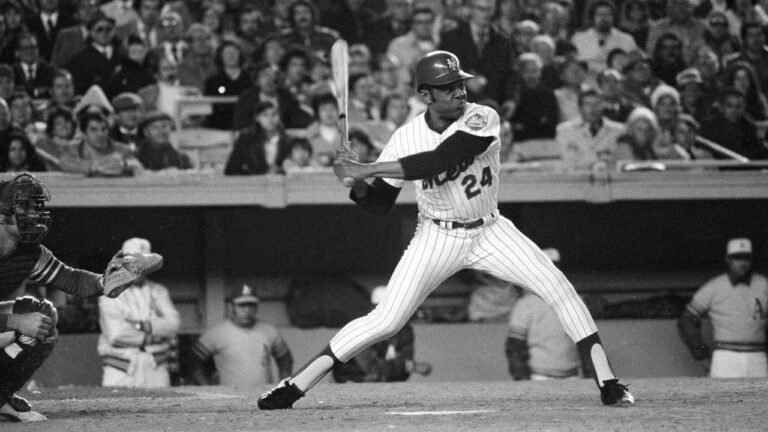
Willie Mays, one of the purest, most electrifying athletes ever to grace the game of baseball, passed away on June 18, 2024, at the age of 93. The news hit like a curveball to the heart for millions—fans, players, and admirers who saw not just a player, but poetry in motion.

Let’s be honest—some legends play the game. But Mays was the game.


A Life Beyond the Scoreboard

Born in the humble town of Westfield, Alabama, on May 6, 1931, Mays wasn’t just born into baseball. He breathed it. As a young Black boy in the Deep South, he rose through the ranks of the Negro Leagues, playing for the Birmingham Black Barons by the time he was 17.

He entered Major League Baseball in 1951 with the New York Giants, and what followed was nothing short of myth. Over 23 seasons, Mays:

  • Hit 660 home runs
  • Earned 12 Gold Gloves
  • Was named to 24 All-Star Games
  • Stole 338 bases
  • Finished with a career batting average of .301

But the numbers barely capture the magic. He didn’t just play center field—he danced in it. He didn’t just throw a runner out—he lasered it from deep space. His hat would famously fly off as he ran, not for show, but because even gravity couldn’t keep up with his hustle.


That Catch. That Smile. That Grace.

If there was ever a single moment that etched Mays into the American soul, it was “The Catch.” Game 1 of the 1954 World Series. Deep center. Polo Grounds. Over-the-shoulder. Spinning throw.

It was ballet. It was instinct. It was destiny meeting timing.

And in that one play, millions fell in love with a man who would come to symbolize baseball’s soul for decades to come.

But ask any old-timer what made Willie special and they’ll say, “It wasn’t just the catch. It was how he carried himself before and after it.”

No tantrums. No ego. No press conferences laced with controversy. Just excellence.


Quiet Trailblazer in a Loud Era

While Jackie Robinson changed the game by breaking the color line, Mays shaped the future by living beyond it. He didn’t yell from podiums, but his very presence—a Black man dominating every facet of America’s pastime in the mid-20th century—was a statement.

In an era when activism often meant speaking loudly, Mays proved that dignity, presence, and excellence could be revolutionary too.

And yet, his humility never faded. When Barack Obama awarded him the Presidential Medal of Freedom in 2015, Mays stood there like he was just being handed a hot dog and a handshake at the stadium.


A Farewell in Full Bloom

Willie passed away peacefully in Palo Alto, California, just two days before the Giants were set to honor him at Rickwood Field—a place where his pro career began. That ceremony, once intended to celebrate his living legacy, turned into a global memorial.

Baseball Commissioner Rob Manfred summed it up best:

“His incredible achievements and impact on our game will never be forgotten.”

Even the skies seemed to mourn. The game paused. Broadcasters fought back tears. Flags flew a little heavier.

And yet—there was no tragedy in his passing. Just the soft closing of a well-loved chapter.

🕊️ Read the official MLB tribute to Willie Mays here:
MLB.com obituary on Willie Mays


What He Gave Us Was More Than Baseball

Mays didn’t just swing a bat or rob home runs—he gave kids a reason to dream.

He showed America, in all its complexity, that Black excellence could be joyful, graceful, and legendary. He mentored younger players. He gave back through youth foundations. And in his final years, he remained a quiet giant—still watching games, still showing up, still smiling that same “Say Hey” smile.

Many of his personal items will now be auctioned off—not for profit, but to fund community programs for underprivileged youth. It’s a move fitting of a man who never stopped giving.

🧢 His story began in the Negro Leagues—learn more about his earliest days:
Negro Leagues Baseball Museum – Willie Mays


Baseball’s Eternal Center Fielder

In the coming years, they’ll rename fields after him. Statues will be erected. Video tributes will play on loop. But if you want to know Willie Mays, you don’t need to visit a monument.

Just go to a little league field.

Watch a kid chase down a fly ball, trying to keep their hat on, eyes wide with joy. That spirit—that electric spark—is where Mays still lives.

He didn’t just leave a legacy.

He left a blueprint for joy, hustle, and humility.


As He Once Said…

“I never wanted to be the best. I just wanted to play ball the right way.”

Well, Mr. Mays…

You were the best.

And you played it so beautifully that even the stars paused when you swung.

Rest well, Say Hey Kid.

The field will never be the same.

iPhone 17 Series: Recrafting the Legacy or Just Cosmetic Chic? Upgrade worth the Big Hype?

When Apple launches a new iPhone series, the world doesn’t just watch—it waits. And this year, the iPhone 17 lineup promises more than just routine chip upgrades and camera tweaks. From the radical design language to the first-ever iPhone Air, Apple may be subtly rewriting its design rulebook in 2025. But does it go deep enough under the surface? Let’s dive in.


A Design Philosophy Shift: Welcome to the ‘Camera Bar’ Era

Gone are the clustered camera humps. The iPhone 17 Pro and Pro Max now sport a sleek, full-width camera visor and a shifted Apple logo. This isn’t just aesthetic flair—it rebalances MagSafe alignment and paves the way for Apple’s evolving visual identity.

The iPhone 17 Air takes this even further. It’s ultrathin (~5.5 mm), featherlight (~145g), and looks more like a minimal sculpture than a smartphone. With a centered single-lens camera and a streamlined body, it’s Apple at its most design-forward.


Meet the iPhone 17 Air: Minimalism in Motion

The Air is Apple’s answer to those craving elegance over everything. But it doesn’t come without trade-offs:

  • Smaller battery (though aided by silicon-anode efficiency)
  • Mono speaker (no bottom stereo)
  • Single rear camera

Yet it still feels magical. With a 120Hz ProMotion OLED screen, A19 chip, and 8GB RAM, it’s no slouch on performance. If you’re not a content creator but want style, the Air is a statement piece.


Performance: A19 Chips and Real AI Power

The entire lineup features A19 chipsets, with the Pro and Pro Max upgrading to A19 Pro—offering:

  • 6-core GPU
  • Vapor chamber cooling
  • 12GB RAM

iOS 26 complements this with deeper AI integration:

  • Intelligent battery optimization
  • Smarter app memory allocation
  • Siri 2.0 with enhanced follow-up recognition

Everything just works faster and smarter. Gaming, multitasking, FaceTime effects—they all feel snappier and more efficient.


Cameras: Refinement Over Revolution

While the hardware hasn’t changed drastically from the iPhone 16, refinements are noticeable:

  • 24MP selfie cam (up from 12MP)
  • AI-enhanced processing pipeline
  • Pro Max supports dual front-rear recording and better low-light performance

The new visor layout offers stability when lying flat and contributes to the phone’s symmetrical elegance. The results? Still stunning, even if not revolutionary.


Audio: The Underrated Upgrade

Speakers

  • iPhone 17 Pro/Max retain stereo speakers with improved placement
  • iPhone 17 Air sacrifices bottom-firing speaker for thinness

Microphones

  • All models expected to feature upgraded “studio-quality” mic arrays
  • Optimized placement and better SNR
  • Ideal for podcasts, vlogging, and ambient capture

Recording

  • Retains Audio Mix mode from iPhone 16 Pro
  • Enhanced ambient noise control
  • Real-world results are cleaner, richer, and more broadcast-ready

For creators, the Pro and Pro Max models are becoming viable standalone content production tools.


Battery & Charging

  • Pro Max now houses a 5,000 mAh battery—a first
  • Air uses new silicon-anode tech for better density
  • All models feature AI-powered battery management via iOS 26
  • MagSafe ring re-aligned for better grip

Real-world battery life jumps 15-20% over the iPhone 16 generation, especially noticeable on heavy-use days.


Final Comparison: iPhone 17 vs iPhone 16

FeatureiPhone 16 SeriesiPhone 17 SeriesVerdict
Display60Hz (base), 120Hz (Pro)120Hz on all🂚 Major Win
DesignTraditionalVisor, lowered logo, Air model✨ Big Shift
ChipsetA17/A17 ProA19/A19 Pro✅ Noticeable Boost
RAM6GB/8GB8GB/12GB✅ Smoother Multitasking
Cameras12/48MP24MP front, enhanced AI✅ Better Selfies, Subtle Rear Improvements
SpeakersStereo on mostMono on Air, refined stereo on Pro🔊 Slight Trade-off
BatteryUp to 4,400 mAhUp to 5,000 mAh💪 Real Upgrade

Final Verdict: Worth the Hype?

The iPhone 17 series is a balance of bold design and smart refinement. If you’re coming from iPhone 14 or earlier, this is a worthy leap. For iPhone 15/16 users, the call depends on what you value:

  • Go for Air if design thrills you and you want the lightest iPhone yet.
  • Choose Pro Max for power, endurance, and serious creator tools.

“In 2025, Apple didn’t reinvent the phone—they redefined what elegance, utility, and intelligence should feel like in your hand.”

New FastTag Annual Pass? Travel across the country hassle free round the year.

Note: The featured image is an AI rendered version of Nitin gadkari ji.

In a landmark move to streamline toll collection and enhance road travel convenience, the Indian government is considering a FASTag Annual Pass that would allow private vehicle owners unlimited access to national highways for a flat yearly fee of ₹3,000. This proposed subscription model aims to eliminate the hassle of per-trip toll deductions and reduce congestion at toll booths.

The Ministry of Road Transport and Highways (MoRTH) is reportedly reviewing the feasibility of this scheme, which could replace or supplement the current FASTag system that deducts tolls on a per-use basis. Alongside this, a distance-based tolling system—charging users at ₹0.50 per kilometer—is also being explored for those who drive less frequently.

To support this transition, the government is working towards implementing barrier-free tolling using RFID, ANPR cameras, and GPS-based tracking. The dual-model approach is expected to benefit both regular and occasional travelers while promoting digital tolling infrastructure across India.

Once finalized, this policy could revolutionize Indian highway usage, offering predictable travel costs, faster commutes, and a push towards a tech-first national transport ecosystem. Here’s how it stacks up against global innovations:

1. Toll Models Around the World

a) Annual or Subscription Passes

  • Australia: The e‑TAG system offers free‑flow RFID tolling. Users can also buy day passes for occasional travel—mirroring India’s distance‑based alternative
  • USA (E‑ZPass): Many toll agencies in the US allow unlimited use of certain lanes with fixed annual plans—though not all cover entire networks.
  • Europe (Belgium/Scandinavia): Regional pass systems exist for ferries and bridges, but full-network annual passes for light vehicles are rare.

These systems prove subscription models greatly benefit regular users by reducing transaction friction and smoothing travel experiences.

b) Distance‑Based Charging (“Pay‑as‑you‑go”)

  • Germany (LKW‑Maut): Since 2005, trucks pay via GPS/OBU at ~€0.15 /km—tailored by vehicle type and emissions
  • EU GNSS Tolling: East European nations (e.g., Poland, Czech Republic) increasingly adopt GNSS systems using onboard units—no gantries needed.
  • Spain, Portugal, France, Italy: Widespread motorway distance‑based tolling via barrier‑free gantries
  • Singapore ERP: Charges vehicles for entering certain roads or zones at peak times—functioning as time‑based congestion pricing rather than traditional tolling

These systems demonstrate fairness, environmental benefit, and smooth traffic, but face privacy and infrastructure cost considerations.


2. Advanced Technology: Barrier‑Free and Smart Tolling

a) Multi‑Lane Free‑Flow (MLFF)

  • Barrier‑free gantries capture RFID tags and photos at highway speed—no stopping required.
  • Used across Europe, North America (California’s 91 Express), Australia, and more.

b) GNSS‑Based Systems

  • Vehicles equipped with satellite‑based OBUs compute distance traveled and pay accordingly—eliminating roadside infrastructure
  • Adopted in Germany for trucks, with other EU countries soon following

c) ANPR / Video Tolling

  • License plate recognition allows tolling without tags—used as backup or primary systems in Europe and the US

d) Congestion Pricing

  • ERP in Singapore and London’s Congestion Charge illustrate sophisticated road-pricing ecosystems aimed at reducing inner-city traffic

e) AI & Dynamic Pricing

  • Systems like Intellias use real-time traffic and AI models to dynamically adjust tolls for optimal flow

3. Comparing Costs and Convenience

SchemeBenefitsChallenges
Annual Pass (e.g., India, US E‑ZPass)Easy budgeting, unlimited travel, no frequent rechargesMay disincentivize occasional users, requires robust backend reconciliation
Distance‑Based (GNSS / RFID Gantry)Pay only for usage, fairer pricing, eco-friendlySetup costs, privacy issues, complex billing systems
Congestion / Time‑BasedReduces peak-hour traffic, promotes public transportSocial equity concerns, needs strong public transit network
Hybrid / Dynamic PricingBalances fairness, revenue, and demandTechnology and enforcement complexity

4. Key Global Takeaways

  1. Interoperability matters
    Australia’s e‑TAG system lets users travel on any toll road state-wide without multiple accounts
    Europe’s EasyGo tag works across Norway, Sweden, Denmark, and Austria en.wikipedia.org.
  2. Barrier‑free is best
    Gantry-only systems allow uninterrupted speeds—best for reducing congestion and emissions .
  3. Satellite tech enables scale
    GNSS eliminates the need for physical gantries—ideal for whole-country deployment.
  4. Dynamic pricing = smarter roads
    Toll rates can vary by time and traffic—improves network utilization and equity
  5. Privacy vs. efficiency
    GPS tracking raises concerns in EU—GDPR requires strong data safeguards.

5. Recommendations for India

  • Adopt MLFF across major highways: Gantry + RFID/ANPR provides seamless travel.
  • Enable dual options: Offer annual pass (~₹3,000) for frequent travelers and apply road usage (₹0.5/km) for others.
  • Pilot GNSS for heavy vehicles: Start distance-based GPS tolling for trucks, as in Germany.
  • Ensure interoperability: Allow all FASTag issuers to work across lanes and booths, nationwide.
  • Support with dynamic pricing?: Evening or urban road congestion charges could complement highway tolls.
  • Establish robust privacy & data rules: Look to Europe’s GDPR as a guide.
  • Educate users & build trust: Emulate UK and Singapore public campaigns on toll fairness.

6. Conclusion: Towards a Smarter Road Network

India’s dual toll model is both ambitious and well-founded, reflecting global best practices:

  • Annual pass offers convenience akin to subscription toll access in the US and Australia.
  • Distance-based model aligns with Europe’s progressive GNSS and gantry systems for transparency.
  • Barrier-free technology—RFID, ANPR, GPS—will reduce travel time, emissions, and stress.

By integrating dynamic pricing, interstate interoperability, and strong privacy frameworks, India can leapfrog into the realm of world-class, digital-first tolling. This modernization promises economic efficiency, environmental benefits, and equity for highway users.

IAS Officer L. Venkateshwarlu : The Quiet Reformer Powering India’s Administrative Backbone with Sanatana Wisdom

0

In India’s expansive bureaucratic framework, few civil servants embody both administrative rigor and soulful wisdom.

L. Venkateshwarlu, a 1991-batch IAS officer from the Andhra Pradesh cadre, is one of those rare few. Over three decades, he has moved silently but decisively through the ranks—redefining the purpose of public service without ever demanding the spotlight.

His journey began as Chief Development Officer (CDO) in districts like Etawah and Azamgarh, where he focused on rural upliftment through essential services—roads, education, and healthcare. These were not just postings; they were training grounds in empathy and listening. Later, as District Magistrate of Uttarkashi, he led disaster preparedness, tribal rights enforcement, and infrastructural upgrades in one of India’s most challenging terrains.

He rose to public prominence as the Chief Electoral Officer for Uttar Pradesh, where he orchestrated transparent, secure elections in a state with over 150 million people. His approach was methodical, firm, and human-centered—balancing logistics with voter accessibility, and regulation with public trust.

In 2019, Lu was appointed Director General of UPAAM (Uttar Pradesh Academy of Administration and Management). But he didn’t treat UPAAM as a bureaucratic formality. He reshaped it into a living institution—one that modernized civil service training with modules on ethics, financial accountability, and citizen-centric delivery. His legacy there isn’t a speech or a report; it’s the thousands of officers who now carry a deeper sense of duty into every panchayat, municipal board, and district collectorate.

His responsibilities only grew. As Principal Secretary (Transport) in 2024, he led a state-wide push to decommission end-of-life vehicles (ELVs), linking it to larger goals of sustainability and urban planning. His dual role—steering UPAAM while managing the Transport Department—showed his capacity for systems-level leadership without compromising quality or impact.

In 2025, he was promoted to Additional Chief Secretary, taking charge of Social Welfare, Sainik Welfare, Scheduled Caste Training Institutes, and Deendayal Upadhyay State Institute of Rural Development, alongside UPAAM. This wasn’t just a recognition of seniority—it was a confirmation of trust. Few officers are handed portfolios that touch the grassroots, the armed forces, the marginalized, and the future bureaucracy all at once.

And yet, what sets him apart from most high-ranking officers is not just his administrative record. It’s the spiritual substance that permeates his public life.

L. Venkateshwarlu is known in academic and civil service circles for delivering talks on Bhagavad Gita, Ayurveda, and Sanatana Dharma. He often speaks at universities and training institutes—not just on policy, but on personal evolution. For him, administration is not a job. It’s a karmic duty.

He urges youth to stay away from corruption, to find strength in discipline, and to adopt a lifestyle rooted in inner clarity. He teaches the Gita’s idea of Nishkam Karma—action without attachment to reward—and shows how this can lead to a life of both professional success and spiritual peace. Drawing from Ayurveda, he often speaks on emotional regulation, sattvic living, and the alignment of personal conduct with collective welfare.

These talks aren’t sermon-like. They are calm, clear, and lived. His presence feels less like that of a bureaucrat and more like that of a grounded guide—a man who has wrestled with real-world challenges and emerged not hardened, but humble.

Officers trained under him often quote his lines. “Let your conscience be the auditor. Let your Karma be your report card.” That’s the kind of moral compass he quietly instills.

From a village farmer to a city commissioner, from a war widow to a university scholar—his work touches lives across categories. And through every file cleared, every policy executed, and every student addressed, he leaves behind the subtle trace of someone who believes service must be both effective and sacred.

In today’s fast-paced policy ecosystem, where algorithms often overpower altruism, L. Venkateshwarlu stands as a reminder that public administration is most impactful when it is infused with personal integrity and ancient wisdom.

He doesn’t tweet. He doesn’t posture. But he delivers.

Whether it’s modernizing government training, overseeing elections, decongesting transport systems, or explaining Sanatana principles to a room full of aspirants, he does it all with a blend of quiet conviction and clear vision.

In the coming years, if India is to create a new generation of ethical, empathetic, and effective administrators, it will need more officers like L. Venkateshwarlu—not just skilled in governance, but anchored in values.