Home Blog Page 4

AI: From Burgers to AI Resource Management

0

Under the bright heat lamps and behind the polished glass of drive-thrus, a quiet revolution is underway. Artificial intelligence (AI) is reshaping the way burgers are flipped, pizzas are assembled, and fries are perfection-tested—threatening millions of entry-level roles and creating entirely new classes of work. Here’s a CRN1-style exploration of how automation in the fast-food industry sparks a mass metamorphosis (complete transformation) of jobs, and what it means for workers, employers, and communities.

An Industry Built on Human Hands

Fast-food outlets employ roughly 3.6 million Americans, many of whom rely on these roles as their first job or primary income source. Teens cut their teeth as cashiers; career changers find steadiness as line cooks; families depend on predictable shifts flipping patties and manning pizza ovens. In towns large and small, quick-service restaurants have been ubiquitous (found everywhere)—the backbone of entry-level employment and a springboard to greater opportunity.

Automation Hits the Grill, the Oven, and the Counter

Robotic Burger Chefs

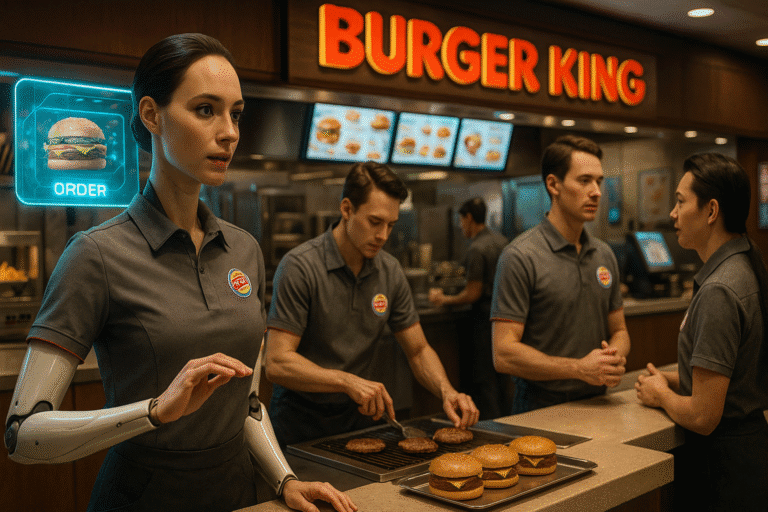
“Flippy,” a robotic arm developed by Miso Robotics, can cook up to 300 burgers per hour—monitoring temperature, adjusting cook times, and flipping patties with millimeter precision. Major chains are piloting these systems chain-wide, with plans to roll out 5,000 units by 2027.

AI-Guided Pizza Assembly

At select Domino’s and Papa John’s locations, vision-guided robots now spread sauce, sprinkle cheese, and arrange toppings in perfectly symmetrical patterns. These machines reduce ingredient waste by up to 15 percent and cut assembly times by 25 percent.

Smart Ordering Kiosks

Natural-language-processing kiosks handle millions of drive-thru and in-store orders, interpreting accents, upselling meal bundles, and integrating loyalty programs—with some chains reporting a 40 percent reduction in cashier headcount.

Combined across burgers, pizza, tacos, and coffee shops, these innovations will touch an estimated 4 million frontline positions by the end of the decade.

Mass-Scale Job Displacement in Numbers

  • Burger Chains: If 50 percent of 200,000 outlets deploy robotic grills that replace 20 staff per location, that’s 2 million roles at risk.
  • Pizza Franchises: With 17,000 U.S. outlets automating dough prep and topping stations—removing an average of 8 positions each—that’s 136,000 potential displacements.
  • Sandwich & Taco Shops: Smart kiosks could replace 600,000 cashier jobs across Subway, Taco Bell, and similar chains.

In total, automation threatens roughly 2.7 million fast-food roles by 2028—nearly 75 percent of today’s workforce in the sector.

From Line Cook to AI Resource Manager

But displacement tells only half the story. New roles emerge to design, deploy, and maintain these systems:

  1. Robotics Supervisor: Monitors performance dashboards, troubleshoots misfires, and coordinates firmware updates.
  2. AI Interaction Specialist: Calibrates voice-recognition models to handle regional dialects and accents in ordering kiosks.
  3. Predictive Maintenance Technician: Uses sensor data to anticipate mechanical wear and schedule preventive repairs.
  4. Data-Driven Quality Analyst: Reviews computer-vision alerts for under-cooked fries or misaligned toppings, preserving brand standards.

These positions demand basic programming knowledge, system-diagnostics skills, and a knack for human-machine collaboration. They also pay 20–40 percent more than traditional fast-food roles—if workers can access the right training.

Bridging the Skills Gap with Rapid Retraining

To re-equip 2.7 million workers, educational institutions and industry players are piloting accelerated programs:

  • 12-Week AI Technical Certificates at community colleges teach machine vision, sensor integration, and basic Python. Graduates report 80 percent job-placement rates.
  • ApprenticeshipUSA Tracks blend on-the-job learning with classroom modules, allowing participants to earn while they upskill.
  • Corporate Bootcamps sponsored by IBM’s SkillsBuild and Microsoft’s Global Skills Initiative enroll over 150,000 service-industry workers annually—offering free online courses in AI fundamentals and cloud-platform management.

These programs emphasize hands-on labs, real-world simulations, and mentorship—transforming line cooks into capable AI resource managers in under three months.

Who Foots the Bill? A Shared-Responsibility Model

Retraining at scale carries an estimated cost of $10,000 per worker—approximately $27 billion nationwide. Funding comes from multiple streams:

  • Federal Grants (WIOA): Cover up to 80 percent of tuition and support services for displaced workers.
  • State Workforce Boards: Match federal dollars, ensuring no region is left behind.
  • Industry Coalitions: Fast-food giants pledge 1 percent of quarterly profits into a “Future Workforce Fund” to underwrite training and stipends.
  • Tech Partnerships: AI leaders provide free modules and subsidized hardware for community colleges and nonprofit training centers.

This collaborative framework aligns incentives: employers invest in a skilled workforce, governments curb unemployment costs, and technology firms cultivate tech-savvy customers and operators.

Centering Human Strengths in an Automated World

Automation’s greatest gift may be liberating workers from repetitive tasks—allowing them to exercise creativity, empathy, and judgment. Instead of monitoring fryer timers all day, a Data-Driven Quality Analyst designs new flavor profiles based on consumer feedback. A Robotics Supervisor leads small teams that fine-tune machine parameters, ensuring both efficiency and food safety.

When frontline teams shift from rote preparation to problem-solving roles, companies report turnover declines of 25–30 percent and measurable gains in customer satisfaction.

A Future Defined by Collaboration, Not Conflict

The fast-food industry’s AI transformation isn’t a zero-sum game. With foresight and cooperation, we can turn mass displacement into mass upskilling—and create a more resilient workforce prepared for tomorrow’s opportunities. As these machines hum in kitchens and garages across America, workers will find themselves at the helm of a new era: from burgers and pizzas to bytes and predictive analytics. In this catalytic (causing significant change) moment, our collective challenge—and chance—is to ensure that no one is left behind.
Remembering Ex-ISRO Chief Dr K Kasturirangan, the wizard of Indian Space mission

0

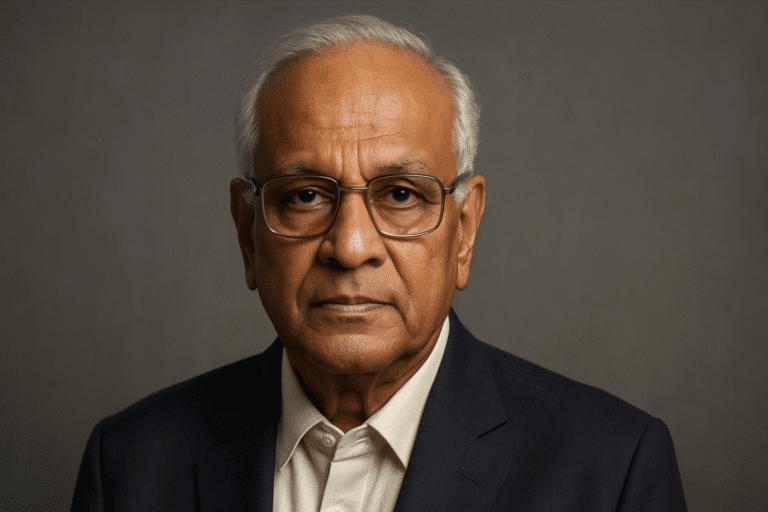
Bengaluru recently bid farewell to one of its most visionary scientists. Dr. Krishnaswamy Kasturirangan, whose quiet determination and boundless curiosity lifted India’s space programme into global prominence, passed away at the age of 84. News of his departure rippled through research institutes, universities, and the hearts of countless students who saw in him both mentor and inspiration. In his own unassuming way, he had turned the dream of an Indian spacefaring nation into reality—and his absence leaves a void as vast as the cosmos he explored.

Born on October 24, 1940, in the coastal town of Ernakulam, Kerala, young Kasturirangan was entranced by stars long before he ever set foot in a laboratory. He devoured every book on astronomy and physics he could find, emerging at the top of his class at local schools. A scholarship brought him to the University of Bombay, where he completed his bachelor’s and master’s degrees in physics with honours. His thesis work caught the eye of mentors at the Physical Research Laboratory in Ahmedabad, where he pursued a Ph.D. in experimental high-energy astronomy—laying the groundwork for a lifetime of scientific leadership.

In the early 1970s, when India’s space programme was still in its formative stages, Kasturirangan joined ISRO as a junior scientist. He threw himself into painstaking ground tests and satellite integration projects, earning a reputation for methodical precision. Colleagues describe him as soft-spoken but unshakeably focused—someone who could translate complex theories into elegant engineering solutions. Within two decades, he had risen through the ranks, and in 1994 he took charge as ISRO’s Chairman and Secretary of the Department of Space.

Under his stewardship, ISRO underwent a transformation. He championed the Polar Satellite Launch Vehicle, turning it into the backbone of India’s Earth observation efforts, and guided the fledgling Geosynchronous Satellite Launch Vehicle programme, which opened the way for heavier communication satellites. Launch schedules intensified, and new weather, navigation, and scientific missions rolled out—each bearing the stamp of his practical optimism. He also cultivated international partnerships, ensuring that India learned from—and contributed to—global space research without losing its independent spirit.

Yet Dr. Kasturirangan’s legacy extends far beyond rockets. A passionate advocate for pure science, he insisted that ISRO invest in missions probing cosmic X-rays, ionospheric physics, and other fundamental questions. He believed that curiosity-driven research would feed back into applied technologies, enriching everything from telecommunications to disaster management. His efforts inspired a generation of space scientists who saw in him not just an administrator, but a fellow explorer of the unknown.

Recognition for his achievements came early and often. The Government of India honoured him with the Padma Shri, the Padma Bhushan, and ultimately the Padma Vibhushan—each accolade marking a milestone in a career defined by service and excellence. Scientific academies awarded him fellowships and medals, but those who worked closest with him say his greatest pride lay in the success of his teams and the thrill of each successful launch.

After stepping down from ISRO in 2003, he turned his attention to academia and policy. As chancellor of institutions like Jawaharlal Nehru University and the Central University of Rajasthan, he modernized curricula and championed interdisciplinary research. At the National Institute of Advanced Studies in Bengaluru, he bridged the gap between policymakers and scientists, serving on bodies that shaped India’s national science strategy. In the Planning Commission and later the Rajya Sabha, he spoke with authority on education and technology, always emphasizing that investment in young minds was India’s surest path to progress.

In his final days, Dr. Kasturirangan remained as engaged as ever—meeting with doctoral candidates, reviewing satellite proposals, and celebrating each new mission’s success with the enthusiasm of a student watching his first rocket lift off. On April 27, thousands gathered at the Regional Research Institute in Bengaluru to pay their respects, a testament to the lives he touched. Stories abounded of his humility: how he would credit junior engineers for breakthroughs, or pause a busy schedule to guide a confused graduate student.

As India prepares for new ventures—to the Moon, Mars, and beyond—it does so on the strong foundation he built. Every satellite that circles our planet, every data set used to predict a monsoon’s path, and every classroom where future scientists ponder the stars carries his imprint. Dr. Kasturirangan’s journey reminds us that great achievements begin with simple curiosity—and that the truest measure of a legacy is the inspiration it leaves behind.

Kevin Gates & Brittany Renner: Burqa-Clad Romance—Empowerment or Loss of Feminine Freedom?

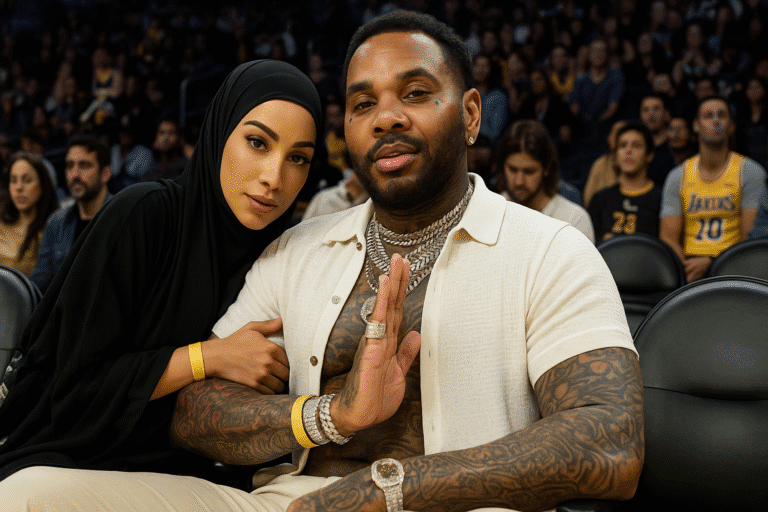
Kevin Gates and Brittany Renner’s unexpected pairing has become one of hip-hop’s hottest headlines—and not just because he’s a Grammy-nominated rapper and she’s a social-media star. In early 2025, cameras caught Gates courtside at Lakers games with Renner by his side, now often seen in a burqa after publicly embracing Islam in October 2024. Their romance has ignited debates far beyond celebrity gossip, raising questions about faith, identity—and whether Renner’s turn toward what many view as a regressive ideology is stifling her freedom of expression as a modern woman.

Kevin Jerome Gilyard, known worldwide as Kevin Gates, rose from Baton Rouge’s gritty streets to mainstream acclaim by blending raw vulnerability with street-hardened lyricism. A convert to Islam himself, he’s balanced chart-topping albums with outspoken reflections on faith and family, often crediting his wife Dreka for anchoring his life and career since their 2015 marriage Wikipedia. Yet, just months after Brittany Renner announced her own conversion, Gates sparked fresh controversy by referring to Renner as his “wife” during an Instagram Live—despite remaining legally married to Dreka. The optics of a devout rapper courting a newly-veiled influencer have sent social feeds into overdrive HotNewHipHop.

Brittany Renner first rose to fame as a candid voice on reality TV and Instagram, unafraid to flaunt her sexuality and speak frankly about relationships. In August 2024, however, she stunned followers by announcing her embrace of Islam: “I haven’t had a drink in six months, haven’t had sex in eight months, and I changed my number four months ago,” she declared, framing her conversion as a liberation from past dependencies and a step toward spiritual purification. Overnight, the model-turned-influencer began covering her hair—and often more—with garments colloquially described as a burqa, signaling a profound shift in her public persona.

On the surface, Renner’s choice might read as a personal journey of faith. But critics argue it reflects recalcitrance (stubborn resistance) to feminist ideals, swapping one form of validation for another—this time under patriarchal supervision. When she dons a burqa, Renner places herself within a tradition that liberal feminists often label a tool of subjugation (the action of bringing someone under domination) rather than empowerment. In France, anti-burqa laws were enacted to “liberate Muslim women from what is perceived as a symbol of oppression,” a stance rooted in secularism and gender-equality principles kingsbusinessreview.co.uk.

Renner has defended her choice as an act of devout humility: “When I originally joined Instagram … I joined for validation and male attention. Now I no longer need either of those things,” she explained, suggesting the veil shields her from objectification. Yet this narrative glosses over how full veiling can deny women agency in their public and private lives. As political theorist Elham Manea observes, “The re-Islamisation … turned the burka into an ‘Islamic’ tradition,” but its real effect is often to segregate women from public engagement and restrict their self-expression.

In practical terms, Renner’s new regimen imposes rigid curbs: no alcohol, no premarital intimacy, stringent dress codes. While framed as spiritual discipline, these rules parallel the very cultural constraints she once railed against as an advocate for unabashed female sexuality. Her announcement that “I’m in search of the truth … the only guidance is God’s guidance” underscores a shift from personal autonomy toward doctrinal adherence For a woman whose brand was built on unabashed openness, this retreat behind layers of cloth feels less like empowerment and more like self-erasure.

The irony deepens when one considers the origins of the veil. As Manea critiques, wearing the burqa in many Middle Eastern contexts emerged under Wahhabi Salafi influences, not classical Islamic practice—a top-down imposition rather than a grassroots choice, often enforced by state or religious authorities In Brittany’s case, her adoption of this attire seems less a reclaiming of heritage and more a concession to a regime that prizes female invisibility over visibility. The question becomes: is she choosing faith, or conceding to a set of rules that curtail her role as an outspoken public figure?

Moreover, the social-media machinery that once amplified Renner’s every provocative post now struggles with her silence. Where she once used her platform to champion body positivity and sexual freedom, she now posts only sporadically—“inconsistent,” as she admits—with content tightly vetted through religious lenses This contraction of expression contradicts core feminist tenets that advocate for a woman’s right to speak, be seen, and control her own narrative.

Kevin Gates, for his part, has stood by Renner amid the backlash—defending her faith in comments and on livestreams. But his public defense cannot mask the broader tension: here is a high-profile female influencer trading her once-bold self for a silhouette that silences most of what once made her magnetic. Fans ask whether this marks true spiritual growth or an abdication of her hard-won platform, a retreat into a regressive ideology that prizes female quietude over vocal empowerment.

Their romance, unfolding against a backdrop of religious devotion and celebrity intrigue, thus exemplifies the clash between modern feminism and conservative traditions. When Brittany Renner steps out in burqa, she becomes both a symbol of religious piety and a cautionary tale—a reminder that when ideology demands uniformity over self-expression, even the most liberated women risk losing their voice.

In a digital age hungry for authenticity, Renner’s journey raises a potent question: can a public figure fully embrace a faith that restricts her speech and appearance without betraying the very essence of her influence? Or has she, in pursuit of spiritual peace, ceded the independence that once made her resonate with millions? As eyes remain glued to their next public move, one thing is clear: Brittany Renner’s conversion story is not just about faith—it’s a litmus test for whether a modern woman can wear tradition without sacrificing freedom.

Nitin Agarwal Steps Down as GlobalBees CEO: A Salute to a Visionary Leader’s Inspiring Journey

0

The Indian startup ecosystem witnessed a bittersweet moment recently, as Nitin Agarwal, the co-founder and CEO of GlobalBees, officially stepped down from his leadership role. Citing personal and health-related reasons, Agarwal’s exit marks the end of a defining era for one of India’s most dynamic “house of brands” startups.
In his place, Anuj Jain, previously leading FirstCry’s preschool segment, has been named the new CEO, signaling the start of a fresh chapter for GlobalBees.
(Source)

But stepping back from day-to-day operations does not mean stepping away from the legacy Nitin Agarwal has carved out—one built on relentless innovation, strategic foresight, and a lifelong passion for building businesses that matter.


🚀 Early Career: From Citibank to Transformative Leadership

An alumnus of the prestigious Indian Institute of Technology (IIT) Delhi, Nitin Agarwal’s professional story began in the corporate corridors of Citibank in 1998. Early exposure to structured global business models sharpened his analytical and leadership skills, but his true calling lay elsewhere—in entrepreneurship and disruptive innovation.

Over the next decade, he took on senior leadership roles, notably at Edelweiss Financial Services, where he held multiple strategic portfolios: President, Group CIO, CTO, and Chief Digital Officer. At Edelweiss, he was instrumental in driving large-scale digital transformation initiatives and laying the foundation for future-ready financial services.


👟 The BigShoeBazaar (Yebhi.com) Era: A Pioneer in Indian E-Commerce

One cannot talk about Nitin Agarwal’s incredible journey without highlighting his game-changing stint with BigShoeBazaar (later famously known as Yebhi.com).

In the early 2010s, when India’s e-commerce industry was still in its infancy, BigShoeBazaar emerged as one of the pioneers, specializing in lifestyle retail, particularly footwear and fashion. Under Agarwal’s co-founding leadership, Yebhi.com expanded rapidly, becoming one of the most recognizable names in India’s online shopping boom.

Nitin was not just a part of the founding team—he was an architect of scaling operations, creating seamless consumer experiences, and driving brand trust in an uncharted digital market.

Even though the Indian e-commerce wars eventually saw consolidation and fierce competition, Agarwal’s learnings at BigShoeBazaar/Yebhi were invaluable. They laid the groundwork for his deep understanding of consumer behavior, operational scalability, and how to build ecosystems instead of just individual brands—insights that he later brilliantly applied at GlobalBees.

In many ways, GlobalBees was the spiritual successor to the e-commerce battles he fought and won during the Yebhi days.


🏡 Founding GlobalBees: Turning Vision into a Unicorn Reality

In April 2021, Agarwal teamed up with Supam Maheshwari (Founder of FirstCry) to launch GlobalBees.
Their mission was bold but clear: build India’s answer to the “Thrasio model” by acquiring promising direct-to-consumer (D2C) brands and scaling them to glory under a unified house of brands.

Under Agarwal’s strategic leadership:

  • GlobalBees became a unicorn within just seven months of its founding.
  • Over 30 brands were acquired across categories like personal care, home essentials, lifestyle, and nutrition.
  • Strategic backers like Lightspeed Ventures, SoftBank, and Premji Invest fueled this meteoric rise.

Nitin’s GlobalBees approach was not just about acquisition—it was about scaling intelligently. His strong belief in data-driven growth strategies, operational excellence, and customer-centricity helped GlobalBees become one of the most admired players in the D2C space.


🎯 Championing India’s D2C Revolution

By building GlobalBees, Agarwal didn’t just create a successful company—he helped power an entire new wave of entrepreneurship.

Through brand partnerships, mentoring new-age entrepreneurs, and providing financial and logistical support to emerging brands, he empowered dozens of small businesses to dream bigger and scale faster.
His influence helped diversify India’s consumer economy, making space for innovative, homegrown brands to flourish alongside traditional retail giants.


🔥 Challenges, Transition, and New Horizons

Every entrepreneur’s journey comes with its share of storms.
The broader D2C and e-commerce space faced macroeconomic headwinds post-2022, including slowing venture capital funding, intense competition, and shifting consumer behavior.

Amidst these challenges, Nitin Agarwal’s decision to step down from GlobalBees’ day-to-day leadership reflects immense maturity. Instead of holding on during turbulence, he chose to make way for a fresh leadership voice—Anuj Jain—to guide the company through its next phase.

It’s a move that shows humility, self-awareness, and genuine commitment to GlobalBees’ long-term future.


🌟 A Lasting Legacy

Nitin Agarwal’s entrepreneurial journey leaves behind a blueprint for others to follow:

  • Visionary Thinking: From spotting the early wave of Indian e-commerce at Yebhi to seeing the D2C revolution early at GlobalBees.
  • Execution Excellence: Scaling businesses rapidly yet thoughtfully, with a keen focus on consumer needs.
  • Mentorship Mindset: Empowering newer entrepreneurs to scale up their dreams.
  • Graceful Leadership: Knowing when to build and when to pass the baton.

Even as he steps back today, the companies he built—and the many he inspired—will continue to echo his values for years to come.


🧐 Why His Career Matters Even More Now

In a time when startups often chase valuations at the cost of value creation, Nitin Agarwal’s career reminds us that building lasting impact requires patience, conviction, humility—and a love for solving real problems.

He embodies the spirit of India’s evolving digital economy: not just dreaming big, but building smartly and sustainably.


Final Word 🌸

Today, as we celebrate Nitin Agarwal’s journey from the early e-commerce battles of BigShoeBazaar/Yebhi, through the unicorn rise of GlobalBees, and onto whatever adventures lie ahead, one thing is clear: Indian startups are stronger because leaders like him dared to dream—and dared to deliver.

Wishing him health, happiness, and many more milestones in the future!


Sources:

Decoding DeFi: The Quiet Revolution in Finance

If you’ve been anywhere near a cryptocurrency conversation, you’ve probably heard the term DeFi tossed around like a magic word. It’s often hailed as the future of banking, the destruction of traditional finance, or, for some, just another confusing tech buzzword. But at its heart, DeFi — short for Decentralized Finance — isn’t about revolution for the sake of drama. It’s about a slow, technical shift in how financial services are structured, built, and used.

Let’s dive into the real, unglamorous, but fascinating world of DeFi—minus the noise, and minus the marketing slogans.


What Exactly is DeFi?

At its simplest, DeFi refers to a system where financial products—like loans, savings accounts, trading platforms, insurance, and more—operate without centralized intermediaries like banks, brokerages, or insurance companies. Instead, these services run on blockchain networks, mostly using smart contracts—self-executing bits of code that automatically carry out transactions once specific conditions are met.

In short:
Traditional Finance = Banks, brokers, approval letters
DeFi = Code, consensus, instant execution


How Did DeFi Start?

The seeds of DeFi were planted when Bitcoin was created in 2009. Bitcoin proved that value could be transferred without banks. But Bitcoin was mainly about simple transactions—sending and receiving.

The real explosion came with Ethereum in 2015. Ethereum wasn’t just about sending money; it allowed programmers to build smart contracts—automated scripts that could manage money without human intervention.

From there, decentralized lending platforms, decentralized exchanges (DEXs), yield farming protocols, insurance pools, and even decentralized stablecoins (like DAI) emerged. The DeFi ecosystem started growing quietly—piece by piece, code by code.


Key Features of DeFi

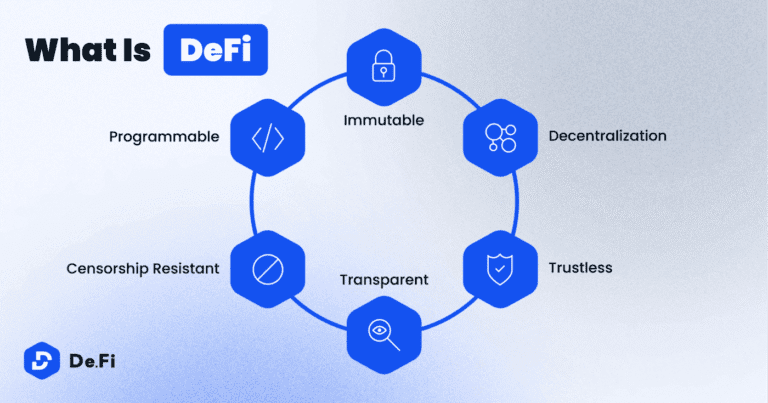
Understanding DeFi’s true nature means getting familiar with its basic pillars:

1. Decentralization

There’s no single company, government, or person controlling DeFi apps. Decisions about upgrades or policies are often made by user communities through governance tokens and voting.

2. Transparency

Since everything happens on public blockchains, you can literally see every transaction happening live. It’s like having a full ledger open to the entire world.

3. Permissionless Access

No “bank approval” required. Anyone with an internet connection and a crypto wallet (like MetaMask) can use DeFi apps. No nationality, income proof, or credit score barriers.

4. Non-custodial

You control your own assets. In traditional finance, your bank “holds” your money. In DeFi, your crypto wallet holds your funds directly—you own your private keys and control your money.


Core Components of DeFi

DeFi isn’t just one thing. It’s an ecosystem made of various services. Some of the key areas include:

  • Decentralized Exchanges (DEXs):
    Platforms like Uniswap and SushiSwap where people trade cryptocurrencies directly, without intermediaries.
  • Lending and Borrowing Platforms:
    Protocols like Aave or Compound let you lend your crypto and earn interest, or borrow assets against your own holdings.
  • Stablecoins:
    Cryptocurrencies like DAI that maintain a stable value, usually pegged to the US dollar, to counter crypto’s famous volatility.
  • Yield Farming:
    Providing liquidity to DeFi platforms and earning rewards—often in the form of additional tokens.
  • Insurance:
    Decentralized insurance platforms like Nexus Mutual offer coverage against things like smart contract failures.
  • Synthetic Assets:
    Platforms like Synthetix create blockchain-based versions of real-world assets like gold, stocks, or currencies.

How Do Smart Contracts Work in DeFi?

Think of smart contracts as vending machines:

  • You insert money.
  • The machine checks the amount.
  • If it matches the price, the product is automatically released.

Similarly, in DeFi:

  • You lock your crypto into a smart contract.
  • If conditions are met (like a loan repayment), the funds are released automatically.

No middleman. No back-and-forth paperwork. Just code, rules, and execution.


Advantages of DeFi

While DeFi isn’t magic, it does offer genuine benefits when done right:

  • Global Access:
    A user in a rural village with only a smartphone can access the same financial services as a Wall Street banker.
  • Financial Innovation:
    Programmers can build new services without waiting for permission from regulators or gatekeepers.
  • User Empowerment:
    Individuals control their own money, their own decisions, and even (through governance tokens) the future of the platforms they use.

Challenges and Limitations

DeFi isn’t without its flaws—and being honest about them is key:

  • Security Risks:
    Smart contracts can have bugs. If vulnerabilities exist, hackers can exploit them and drain funds.
  • Volatility:
    Many DeFi platforms rely on volatile cryptocurrencies. Sharp price changes can lead to unexpected liquidations and losses.
  • Regulatory Uncertainty:
    Governments around the world are still figuring out how to regulate DeFi, and future laws could affect how these platforms operate.
  • Complexity:
    Using DeFi isn’t as easy as downloading a bank app. Users need to understand crypto wallets, gas fees, token swaps, and risks.

Is DeFi Here to Stay?

DeFi today is like the early internet of the 1990s: messy, exciting, full of potential but rough around the edges. Some projects will fail. Some experiments will vanish. But the core idea—that financial services can be decentralized, global, and open—is unlikely to disappear.

Whether DeFi completely replaces traditional finance or simply runs alongside it, it has already changed the way people think about money, trust, and innovation.

The next phase could be smoother user experiences, stronger regulations, and smarter integrations with traditional systems. Or it could be something no one has imagined yet—after all, that’s the nature of decentralized evolution.


Note: This article is based on factual, verified information publicly available as of April 2025. It is written for educational purposes, with no speculative content or financial advice.

Why Movie Ratings Must Be 100% Accurate for Kids: A Deep Dive into Cinema Trauma

In a world flooded with screens, children are consuming movies and shows more than ever before.
Parents rely heavily on official age ratings to decide what’s “safe” for their little ones.
Yet increasingly, many so-called “child-safe” titles, rated 7+ or 13+, casually feature kissing, smoking, drinking, and even violence — leaving parents shocked and betrayed.

This isn’t just an inconvenience —
It’s a serious breach of trust.

When a movie rating isn’t 100% accurate and aligned with what it promises, it exposes children to content that can deeply influence their emotional and behavioral development.
Let’s dive deep into why ratings must be absolutely reliable — and what’s happening today, especially across Indian and American OTT platforms and movie industries.


The Purpose of Movie Ratings: Trust and Protection

Movie ratings exist for one simple, powerful reason: to protect viewers, especially minors, from content they are not emotionally or mentally ready to handle.

Ratings should clearly inform:

  • Level of violence
  • Presence of sexual content
  • Language intensity
  • Depictions of drugs, smoking, drinking
  • Frightening or disturbing scenes

When ratings are accurate, parents can confidently guide their children’s media diet.
When they are misleading, it becomes a silent betrayal of trust.


The Problem: Ratings Are Often Inconsistent and Misleading

Despite rating systems existing, a troubling pattern has emerged:

  • 7+ or 13+ titles showing kissing scenes casually, normalizing early romantic behavior to children.
  • Subtle or blatant smoking and alcohol scenes, often without warning.
  • Mature jokes, innuendo, and dark humor slipping through “child-friendly” categories.

And unfortunately, this isn’t an isolated problem.

A Real-World Example:

  • Shows like Stranger Things (Netflix, rated TV-14 in the USA) feature horror elements, substance abuse, and romantic kissing scenes — yet many 10-11 year-olds watch it believing it’s “okay” because it sounds teen-friendly.
  • Movies like The Archies (Netflix India, U/A 13+) showcase drinking, smoking, and romantic scenes — quite openly — even though it’s marketed as a fun musical for teens and families.

The result?
Children are exposed to adult emotions, habits, and pressures long before they are psychologically prepared for it.


Indian Rating Systems: CBFC and OTT Guidelines

In India, the Central Board of Film Certification (CBFC) rates theatrical releases with labels like:

  • U (Universal – suitable for all)
  • U/A 7+, U/A 13+, U/A 16+ (with parental guidance suggested)
  • A (Adults Only)

For OTT platforms, as of 2021, India introduced self-regulation guidelines through the Information Technology (Intermediary Guidelines and Digital Media Ethics Code).

OTT platforms like Netflix, Amazon Prime, Hotstar, and others must now classify their content under:

  • U
  • 7+
  • 13+
  • 16+
  • A (18+)

However, there is no strict government censorship for OTT content. Platforms are self-regulating — and unfortunately, many push boundaries loosely to attract broader viewership.

Result:
Parents trusting a “7+” or “13+” rating on Indian OTT platforms often find unexpected mature content.


American Rating Systems: MPAA and TV Parental Guidelines

In the United States:

  • Movies are rated by the Motion Picture Association (MPA):
    • G (General Audience)
    • PG (Parental Guidance Suggested)
    • PG-13 (Parents Strongly Cautioned)
    • R (Restricted)
    • NC-17 (Adults Only)
  • Television uses the TV Parental Guidelines:
    • TV-Y, TV-Y7 (suitable for children)
    • TV-G, TV-PG, TV-14, TV-MA

OTT platforms like Netflix, Disney+, Amazon Prime Video display these ratings or adapted versions.

Problems here too:

  • TV-14 or PG-13 often includes kissing, mild sexual innuendo, smoking scenes, drinking scenes — with no detailed warnings.
  • “PG” movies sometimes casually depict social drinking or romantic advances, normalized for 8-12 year-olds.

Just because it’s not graphic or explicit doesn’t mean it’s harmless for growing minds.


Why This Matters: The Hidden Dangers

1. Early Sexualization:
Repeated exposure to romantic behavior (kissing, flirting) rewires children’s brains to see early dating and physical intimacy as “normal” — long before they’re ready.

2. Normalization of Smoking and Drinking:
Studies show that children exposed to smoking/drinking in media are more likely to experiment with these habits later in adolescence.

3. Desensitization to Violence and Vulgarity:
Even “mild” violent acts or dark humor chips away at emotional sensitivity, normalizing aggression.

4. Erosion of Innocence:
Childhood is a sacred window of imagination, wonder, and emotional simplicity.
Premature exposure to adult themes robs them of this phase — forever.


Solutions: How We Can Demand Better

The responsibility doesn’t just lie with parents —
It lies with governments, OTT platforms, and content creators.

Here’s what must be done urgently:

  • Stricter Enforcement:
    Governments must introduce binding age verification mechanisms for OTTs and penalize mislabeling of content.
  • More Specific Content Warnings:
    Instead of just “7+” or “13+”, labels should specify: “Contains mild kissing scenes”, “Shows smoking”, “Mentions alcohol”.
  • Transparent Algorithms:
    Streaming services should offer parental control dashboards showing exact scenes/content descriptions before playback.
  • Content Accountability:
    Directors and producers should be socially accountable for honestly labeling the emotional and psychological content intended.
  • Empowering Parents:
    Parents must be encouraged to pre-screen or watch trailers/reviews beforehand — not blindly trust platform ratings.

Conclusion: Protecting Childhood is Protecting the Future

When we hand a movie or show to a child,
We’re not just handing over entertainment.
We’re handing over a blueprint for how they will see love, friendship, fun, danger, and life itself.

A misleading rating isn’t a small oversight —
It’s a violation of trust, of innocence, of responsibility.

As a society, we must demand — not politely request — that movie ratings be 100% accurate, fully transparent, and truly safe for the age they claim to protect.

Because in a noisy, chaotic, often harsh world,
childhood should remain a sanctuary
not a battlefield.

And safeguarding that innocence isn’t just a duty.
It’s a sacred promise.

MaXXXine Trailer: Mia Goth’s Bloody Hollywood Dream Shines, But Raises a Big Question Too

The trailer for MaXXXine, the highly anticipated third and final chapter in Ti West’s bold horror trilogy, has finally dropped—and it’s a mesmerizing, glitter-soaked nightmare. Set against the pulsing chaos of 1980s Los Angeles, MaXXXine picks up Maxine Minx’s story where X left off, as she desperately tries to swap her adult film fame for legitimate Hollywood stardom.

But success never comes easy—especially when a shadowy killer starts hunting you down.


🎬 From Survival Star to Hollywood It-Girl: Maxine’s Gritty Journey

Maxine Minx, played fiercely by Mia Goth, has survived more than most. The lone survivor of the Texas porn massacre from X, she heads to Los Angeles to chase her bigger dreams.

In MaXXXine, she’s auditioning for The Puritan II, a slasher movie sequel that could be her ticket out of the adult film world. Yet behind the glamour, Maxine is haunted—both by the skeletons of her past and by a literal stalker terrorizing the city.

The setting? A Hollywood dripping with neon lights, synth music, sleaze… and blood.


🌟 Mia Goth: Still the Reigning Queen of Horror

If there’s a modern-day horror queen, Mia Goth wears the crown and the blood-streaked dress.

Her performance as Maxine oozes ambition, desperation, and a chilling steeliness. As The Guardian praises, “Goth is well worth the price of admission, if only for the chilling, almost reptilian glaze of ambition in her eyes.” Every frame of the trailer promises a Mia Goth masterclass in tension, trauma, and transformation.

Mia isn’t just acting anymore—she’s becoming a genre. And MaXXXine looks like the perfect, gruesome final chapter of her metamorphosis.


👠 A Killer Ensemble Cast

Ti West’s latest horror gem also boasts an ensemble dripping with coolness.

  • Elizabeth Debicki transforms into a commanding horror director.
  • Kevin Bacon slithers in as a sleazy private detective.
  • Bobby Cannavale flexes grit as Detective Torres.
  • Lily Collins, Halsey, Michelle Monaghan, Moses Sumney, and Giancarlo Esposito round out a dazzlingly stylish cast.

Their intersecting storylines create a dark web of ambition, jealousy, and, of course, death.

It feels like a twisted love letter to Hollywood itself—a town where fame is won, sold, and sometimes… bled for.


📼 Pure 1980s Gold: A Nostalgic Horror Playground

If you’re a sucker for 80s horror, MaXXXine will feel like a neon-drenched paradise.

The film plunges into the VHS aesthetic with grainy cinematography, synth-heavy soundtracks, and practical gore effects that pay tribute to the golden age of slasher flicks. Think Maniac, Friday the 13th Part 2, or even a touch of Dressed to Kill.

Ti West even used Universal Studios’ old Bates Motel set to anchor the throwback vibe—and every visual oozes love for the gritty, grimy, glorious 80s horror scene.


🔪 Night Stalker Vibes: Real-Life Horror Seeps In

Adding an unsettling layer of realism, MaXXXine draws inspiration from the real-life Night Stalker murders by Richard Ramirez that terrorized Los Angeles during the 1980s.

The trailer hints that Maxine’s stalker may not just be a slasher-movie trope but a chilling nod to the true horrors lurking just beyond Hollywood’s glitzy facade.

Blurring the line between fact and fiction gives MaXXXine an extra punch of dread—and reminds us that no amount of stardust can hide the city’s darkness.


🎥 A Trilogy’s Bold Finale

With X introducing us to Maxine and Pearl revealing the twisted origin story of her nemesis, MaXXXine stands poised to bring the entire journey full circle.

While early reviewers have hailed the film as a stylish and satisfying close to the trilogy, some noted that it doesn’t completely eclipse Pearl’s haunting beauty. As Rotten Tomatoes wrote in its first look, “It’s a gnarly, potent satire with a magnetic Mia Goth at her best.”

No matter what, MaXXXine is the bloody cherry on top of a trilogy that dared to mix art, horror, and heartache in daring new ways.


🧐 But… Too Much Obscenity? A Growing Concern

As much as the horror world is celebrating MaXXXine‘s release, a growing segment of moviegoers—especially families and casual fans—are asking a fair question:

Why must every bold, stylish movie be so heavily loaded with explicit content that it becomes impossible to watch with family or younger audiences?

From the trailer alone, MaXXXine hints at heavy sexual content, nudity, and graphic violence. Sure, the subject matter—following a former adult film star—is bound to include those themes. But many feel that today’s filmmakers often overindulge in showing everything, stripping away the subtlety that once made horror feel tense and sophisticated rather than merely shocking.

In an era where movies like Jaws and The Sixth Sense managed to terrify without being explicit, some wonder if we’re losing that artistry. Couldn’t we craft gripping, stylish thrillers that are intelligent enough for adults yet still atmospheric enough for young horror fans to grow into?

It’s a debate worth having—and MaXXXine seems destined to spark even more of it.


💄 Final Verdict: A Twisted, Gorgeous, Blood-Drenched Farewell

Whether you’re here for Mia Goth’s powerhouse performance, the blood-soaked 80s aesthetic, or just pure horror thrills, MaXXXine promises an unforgettable ride.

It’s gritty. It’s glamorous. It’s dangerous. And it’s Mia Goth unleashed like never before.

But it also quietly nudges us to think: What kind of horror will we create for future generations? Can we thrill and chill without always pushing boundaries into territory where only adults can follow?

Until then, one thing’s for sure: MaXXXine is a dazzling, violent love letter to horror’s sleaziest, bloodiest era—and Mia Goth will be remembered as one of its brightest, blood-smeared stars.


📺 Ready for the ride? Catch the trailer here:

MaXXXine | Official Trailer HD | A24


Quick Sources:

Beyond the Screen: Escaping Digital Consumption and Rediscovering Life’s True Beauty

In today’s world, it feels almost impossible to escape the glow of a screen.
The smartphone buzzes.
The emails pile up.
The endless scrolling continues — newsfeeds, reels, tweets, pings, updates — all blurring together in an unrelenting digital noise.

We live in a society where digital consumption has quietly become our second nature, and along with it, an invisible thief is robbing us: mental fatigue.

But the good news?
Life — real, vibrant, heart-touching life — still exists beyond the internet.
And today, maybe it’s time to remember how beautifully we once lived… and can live again.


The Silent Weight of Digital Overload

At first, technology promised us freedom.
Faster communication, more information, endless entertainment.
And yes, it delivered. But somewhere along the way, something shifted.

  • The average adult now spends over 7 hours per day on digital screens.
  • Teenagers can clock up to 9 hours daily on social media, often mindlessly.
  • Nearly 1 in 3 adults reports feeling “constantly tired” — not because of physical exhaustion, but from mental overstimulation.

This isn’t just about “too much screen time.”
It’s about fragmented attention.
Constant comparison.
Dopamine addiction from likes, views, and shares.
Chronic alertness that our nervous systems were never designed to handle.

Mental fatigue — that deep, soul-level tiredness — sets in when the mind is overstretched without rest, recovery, or true engagement with the real world.

We’re connected, yes — but also lonelier, angrier, and more anxious than ever before.


When Did We Stop Living for Ourselves?

Remember when life wasn’t about broadcasting every moment?
When a sunset was simply admired — not Instagrammed?
When conversations flowed without glancing at buzzing phones?

There was a time when:

  • Reading a book wasn’t interrupted by notifications.
  • A walk felt like a discovery, not a photo-op.
  • Meals were about stories, not selfies.

We’ve gradually traded depth for distraction.
And the cost?
Our attention spans are shrinking.
Our inner peace feels fragile.
Our ability to just be — without stimulation — is fading.

But here’s the beautiful secret:
It’s never too late to come back home to yourself.


How to Relive a Beautiful Life Away from the Internet

Ready to breathe again?
Here’s how to start rediscovering life beyond the screen:


1. Digital Decluttering: Less is More

Not everything needs a notification.
Not every app deserves your mindspace.

  • Uninstall apps you haven’t used in the last month.
  • Turn off all unnecessary notifications (yes, even Instagram).
  • Keep your phone out of sight for at least 2 hours daily.

Give yourself the blessing of fewer choices and more peace.


2. Slow Mornings, Tech-Free

How you start your morning sets the tone for your mind.

  • For the first hour after waking up, stay off all screens.
  • Light a candle. Stretch. Journal. Pray. Sit with your tea.
  • Let your own thoughts greet you before the world’s noise barges in.

There is magic in mornings when they are slow, sacred, and screenless.


3. Relearn the Art of Deep Attention

Choose one real-world experience daily and give it your undivided presence.

  • Watch a bird outside your window.
  • Listen intently when someone talks.
  • Feel the textures of your food as you eat.

Practice mono-tasking instead of multi-tasking.
Presence turns ordinary moments into miracles.


4. Nature as Your Sanctuary

Did you know?
Studies show spending at least 2 hours a week in nature significantly reduces anxiety, depression, and fatigue.

  • Walk barefoot on grass (this is called grounding).
  • Watch sunsets without photographing them.
  • Sit under a tree with no agenda but to simply be.

Nature doesn’t ask anything from you — it only heals.


5. Create More Than You Consume

Consumption is passive.
Creation is active.

  • Write a poem.
  • Paint with your fingers.
  • Cook a new dish.
  • Build a birdhouse.
  • Dance to your favorite song.

When you create, you shift from being a receiver of noise to a maker of beauty.


6. Rediscover Human Connection

The internet gave us global connections, but sometimes at the cost of intimacy.

  • Call an old friend — not text, call.
  • Host a small dinner with no phones allowed.
  • Smile at strangers during your errands.

Nothing replaces the magic of real eye contact, laughter, and shared silence.


7. Digital Sabbaths: A Day Without the Web

Once a week, practice a full day without internet.

  • No social media.
  • No emails.
  • No YouTube binges.

Instead:

  • Visit a museum.
  • Try gardening.
  • Volunteer at a shelter.
  • Meditate. Reflect. Dream.

You’ll feel your spirit stretch wide open again.


A Beautiful Truth to Remember

You are not your followers, your inbox, your trending tweets, or your curated selfies.
You are a soul — ancient, wild, tender — longing for real connection, real wonder, and real life.

The internet is a tool.
It should never be your tether.

So, maybe today is a good day to put down the phone, walk into the sunlight, and choose life again.
Not for anyone else.
But for the precious, breathtaking adventure of being fully alive.

Because in the end, the most beautiful moments of your life will never be found on a screen —
They’ll be the ones where you forgot the world, and the world finally remembered you.


India vs Pakistan 2025: Best detailed comparative analysis

0

India vs Pakistan: A 2025 Deep Comparative Study on National Strength Across Military, Economy, Education and diplomacy.

When comparing two neighboring nations that share a complicated history — India and Pakistan — the strength of each country goes far beyond tanks, fighter jets, or missiles. In today’s interconnected world, a nation’s true power is woven from its military capabilities, financial robustness, gold reserves, business ecosystem, educational excellence, and even the strength of its citizens abroad.

Let’s embark on a very detailed, fact-verified, and holistic comparison of India vs Pakistan in 2025.

1. Military Strength: Boots, Wings, and Warships

According to the Global Firepower Index 2025, India is ranked 4th globally while Pakistan holds the 12th spot.

Personnel:

  • India: 1.45 million active personnel
  • Pakistan: 654,000 active personnel

Air Force:

  • India: 2,210 aircraft, including 620 fighter jets
  • Pakistan: 1,372 aircraft, including 356 fighters

Navy:

  • India: 295 naval assets (1 aircraft carrier, 17 submarines)
  • Pakistan: 100 naval assets (8 submarines)

Nuclear Arsenal:

  • India: Approx. 160 nuclear warheads
  • Pakistan: Approx. 165 nuclear warheads

Summary:

India maintains a clear technological and operational advantage.

2. Economic Strength: The Financial Backbone

GDP:

  • India: $3.9 trillion
  • Pakistan: $375 billion

Forex Reserves:

  • India: $686.15 billion
  • Pakistan: $4.5 billion

Gold Reserves:

  • India: 876.2 tonnes (~$70.9 billion)
  • Pakistan: ~$5.85 billion

Summary:

India’s financial position is vastly superior in 2025.

3. Wealth and Business Strength: The Billionaire Advantage

Billionaires:

  • India: 191 billionaires
  • Pakistan: Fewer than 10 billionaires

Millionaires:

  • India: 85,698
  • Pakistan: Significantly fewer (~5,000 est.)

Business Emergency Support Potential:

India’s ultra-rich can mobilize massive funds rapidly in case of national emergencies — far more than Pakistan’s smaller elite group.

4. Education and Human Capital: Brain Power Matters

Literacy Rate:

  • India: 80.6%
  • Pakistan: 62%

Average Years of Schooling:

  • India: 5.1 years
  • Pakistan: 3.9 years

Children Out of School:

  • India: 1.39 million
  • Pakistan: 5.37 million

Senior Leadership Talent:

  • India’s top heads are often IIT/IIM/AIIMS or Ivy League educated.
  • Pakistan’s leadership is improving but faces skill gaps.

Summary:

India’s skilled manpower base gives it a decisive advantage.

5. Diaspora Strength: The Silent Power

Indian Diaspora:

  • Size: 35.42 million
  • Top regions: USA, UAE, Canada, UK
  • Annual Remittances: $129 billion
  • CEOs: Google, Microsoft, Adobe, and 24+ Fortune 500 companies led by Indians

Pakistani Diaspora:

  • Size: ~9 million
  • Top regions: Saudi Arabia, UK, UAE
  • Annual Remittances: $26 billion
  • Strong presence in healthcare, trades, and services.

  • 6. Diplomatic Relations: Building Global Alliances
  • In the arena of diplomacy, India enjoys robust and strategically significant relationships with major world powers.
  • • India is a key partner in the Quadrilateral Security Dialogue (QUAD) alongside the United States, Japan, and Australia — strengthening its influence in the Indo-Pacific.
  • • India maintains a comprehensive global strategic partnership with the United States, including deep cooperation on defense, technology, energy, and counterterrorism.
  • • Relations with Russia remain strong, with India being a top buyer of Russian defense equipment and maintaining historical ties.
  • • France and Israel are also important strategic partners, especially in the fields of defense, cybersecurity, and aerospace.
  • • India has built important bridges with the Gulf Cooperation Council (GCC) countries, expanding its trade, energy security, and investment ties.
  • • Even with China, despite border tensions, India remains an indispensable player in the BRICS economic alliance.
  • On the other hand, Pakistan’s diplomatic network is more limited and regionally focused:
  • • Pakistan maintains strong, but increasingly complex, relations with China, heavily relying on the China-Pakistan Economic Corridor (CPEC).
  • • Ties with Gulf nations like Saudi Arabia and the UAE have been traditionally strong, mainly due to religious, remittance, and labor dynamics.
  • • Relations with the United States have weakened over the years, especially post-2011 Osama Bin Laden incident and shifting American interests toward India.
  • • Pakistan’s global image struggles due to persistent concerns over terrorism, political instability, and human rights criticisms.
  • Summary:
  • India’s wide, multi-dimensional global diplomacy offers greater economic resilience, technological leverage, and strategic partnerships, whereas Pakistan’s external relations are narrower and heavily reliant on a few allies.

Summary:

In scale, influence, fundraising capacity, and strategic lobbying, the Indian diaspora is unmatched.

Overall Comparison Table

CategoryIndiaPakistan
Military Rank4th globally12th globally
GDP$3.9 trillion$375 billion
Forex Reserves$686.15 billion$4.5 billion
Gold Reserves$70.9 billion (876.2 tonnes)$5.85 billion
Number of Billionaires191<10
Number of Millionaires85,698~5,000
Literacy Rate80.6%62%
Diaspora Size35.42 million9 million
Annual Diaspora Remittance$129 billion$26 billion

Final Reflection

As of 2025, India’s overall strength dramatically outpaces Pakistan’s across military, financial, business, educational, and global diaspora dimensions. Yet, resilience and national spirit are intangible forces — and both nations possess those deeply.

In an era where economic stamina, technological capability, and global influence are paramount, India’s advantages look increasingly decisive.

But history, after all, is not just about might — it’s about mind.

Rushal Parakh: The cat eyed charmer of Indian Television

In an industry often dominated by flamboyance and theatrics, Rushal Parakh has carved a niche for himself with his understated charm and versatile performances. From his academic pursuits in Pune to the bustling sets of Mumbai’s television studios, Rushal’s journey is a testament to dedication, adaptability, and a deep-seated passion for the arts.

From Aurangabad to the Spotlight

Born on January 23, 1994, in Aurangabad, Maharashtra, Rushal’s early years were rooted in a city known for its rich cultural heritage. Pursuing academic excellence, he completed his MBA from MIT-SOM College in Pune, reflecting a commitment to a well-rounded education. However, the allure of the performing arts beckoned, leading him to enroll in Anupam Kher’s ‘Actor Prepares’ in Mumbai, laying the foundation for his acting career.

A Spectrum of Roles

Rushal’s foray into the entertainment industry began with his television debut in 2015 on the show Pyaar Tune Kya Kiya. This initial exposure paved the way for subsequent roles, including a part in Kavach… Kaali Shaktiyon Se in 2016, showcasing his adaptability to diverse genres.

His portrayal of Uday in Tu Aashiqui (2017) further solidified his presence in the industry, allowing him to explore complex character dynamics.

In 2023, Rushal took on the character of Naksh, a vampire, in the supernatural series Bekaboo. This role highlighted his capacity to delve into unconventional narratives, broadening his acting repertoire.

Later that year, he joined the cast of Parineetii, portraying the negative lead Diljeet. This role marked a significant milestone, as it was his first as a lead in a family drama, allowing him to explore layered characterizations.

Beyond the Screen

Beyond his on-screen endeavors, Rushal is known for his multifaceted interests. He is a trained dancer and has a penchant for singing and playing the guitar, reflecting a deep-seated appreciation for the performing arts. His enthusiasm for travel and road trips is evident from his social media presence, where he shares glimpses of his journeys and experiences.

Rushal’s affection for animals is equally evident. In a heartfelt Instagram post, he refers to his dog, Reo, stating, “chauffeuring only for Mr.Reo,” highlighting the special bond he shares with his pet.

His love for nature is also apparent. In another post, he shares, “Living in my own little bubble, surrounded by nature’s beauty,” reflecting his appreciation for the natural world. 

Personal Life

Rushal’s personal life took a beautiful turn when he married Krinjal Rushal Parakh on November 29, 2022. Their shared Instagram account, @roohkidastaan, offers a glimpse into their life together, filled with travel, food, and heartfelt moments.

Rushal Parakh’s journey in the Indian television industry is marked by a consistent commitment to his craft and a willingness to explore diverse roles. His transition from an MBA graduate to a recognized actor underscores the importance of following one’s passion with dedication and resilience. Coupled with his love for nature and animals, Rushal embodies a blend of artistic integrity and personal authenticity, making him a distinctive presence in the entertainment landscape.