Home Blog Page 6

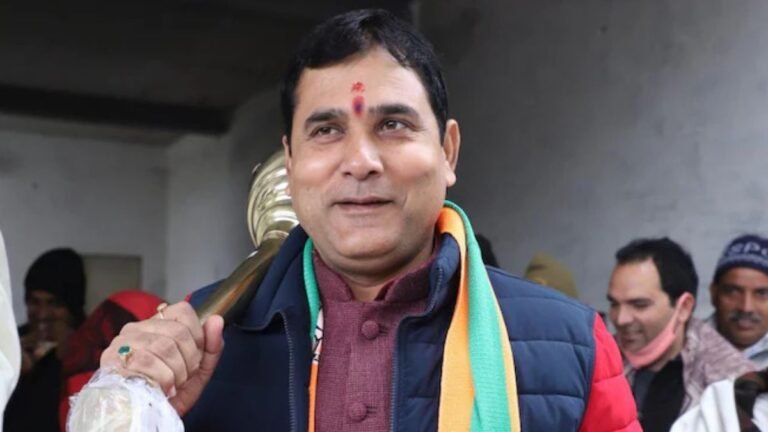
Saurabh Pandey Shaurya – The Storyteller Shaping India’s Digital Awakening

0

In a time where shouting over one another seems to have become the norm in media, Saurabh Pandey Shaurya stands out as a refreshing exception — a storyteller who doesn’t just report facts but nurtures a narrative, adding depth, direction, and dignity to digital journalism. From hosting thought-provoking interviews to building media platforms that inspire, Saurabh is not just a journalist — he’s a bridge between truth and transformation.

Let’s take you through a fascinating journey of a man who believes in the power of shaant (calm) conversation over sensational chaos.


A Digital Torchbearer

Saurabh Pandey Shaurya isn’t your typical news anchor. His calm voice, composed demeanor, and choice of content reflect his belief that media is not just about breaking news but breaking stereotypes.

He currently serves as the Editor of The Chaupal, a rising digital media platform that takes pride in its roots while boldly embracing modern narratives. Under his editorial leadership since 2018, The Chaupal has grown to become a space where traditional values meet today’s youth voices — making it both relatable and reliable.

But his role doesn’t end at being an editor. He is also a media strategist, interviewer, content creator, and an active contributor to India’s political youth voice.


What Makes Him Unique?

There are many journalists. There are many influencers. But there are very few who understand the responsibility that comes with being a public storyteller. Saurabh’s storytelling is grounded, respectful, and aimed at driving clarity, not conflict.

What truly sets him apart is his ability to ask the right questions — not the loud ones, but the necessary ones.

✦ Example: The Major Gaurav Arya Interview

One of Saurabh’s most admired interviews is with Major Gaurav Arya, a former army officer and celebrated public speaker. The conversation wasn’t just patriotic fluff. It was nuanced, emotional, and intelligently navigated — allowing audiences to feel, think, and understand. That’s his gift: turning complex subjects into human stories.


More Than Just a Journalist

Saurabh wears multiple hats with ease. While most people know him for his media work, fewer know that he’s also:

  • A poet and a writer, often reflecting on themes of culture, society, and identity.
  • An anchor, hosting shows that explore everything from governance to ground realities.
  • A political communicator, playing a key role in the Bharatiya Janata Yuva Morcha (BJYM) — the youth wing of India’s largest political party.

His ability to straddle both creative and strategic worlds makes him a polymath (a person of wide knowledge or learning) in modern media.


Rooted in Values, Aimed at Vision

Saurabh Pandey Shaurya represents a generation of journalists who haven’t forgotten their roots while chasing the future. Whether he’s speaking about Indian youth, development issues, or political philosophy, his words echo sincerity.

He brings “Desi Intelligence” to Digital Platforms — meaning, his content isn’t just highbrow for the sake of sounding smart. It’s smart in how well it understands the Indian audience.

His posts are often bilingual, laced with colloquial Hindi phrases and crisp English analysis — a true reflection of how India actually thinks and speaks today.


Digital Presence That Educates

Saurabh is active on platforms like Instagram (@spshaurya68) and Facebook, where he shares not only journalistic updates but also personal observations, inspiring quotes, and reflections on media, youth, and social issues.

What’s impressive is that even while being visible, he avoids falling into the trap of “clickbait culture.” He believes in engagement through insight, not intrusion.

Even his captions and headlines carry a careful craft. One can see the journalistic rigour paired with poetic undertones — reminding us that content can be both sharp and soulful.


A Voice for the Youth

Being a part of the National Media Team of BJYM, Saurabh plays an important role in bridging the communication gap between youth politics and mainstream narratives.

He writes, edits, and contributes to youth-oriented publications, ensuring that political discourse stays civil, intelligent, and inclusive.

He knows that Indian youth are not just voters — they are visionaries. And he uses his media skills to amplify that vision, not manipulate it.


Learning From His Journey

There’s a lot that budding journalists, creators, and communicators can learn from Saurabh:

  1. Speak Less, Say More – In an age of noise, his interviews prove that depth doesn’t need decibels.
  2. Be Curious, Not Confrontational – He doesn’t try to trap his guests; he gives them space to express.
  3. Respect the Medium – Whether it’s digital, video, or print, he knows how to tailor the message without losing the essence.
  4. Stay Grounded – Even with rising fame, his content remains children-safe, community-sensitive, and culturally conscious.

Vocabulary Boost:

  1. Polymath (noun) – A person who knows a lot about many different subjects.
    “Saurabh’s journey proves that in modern media, being a polymath is a superpower.”
  2. Introspective (adj.) – Examining one’s own thoughts and feelings.
    “His interviews often have an introspective tone, inviting both the guest and the audience to reflect.”

Final Thoughts: Why Saurabh Pandey Shaurya Matters

In a country where journalism is often accused of being polarising or performative, Saurabh Pandey Shaurya reminds us of what journalism could be — sincere, sharp, and soaked in substance.

He’s not just “covering” stories — he’s curating conversations.

He isn’t chasing virality — he’s building credibility.

And most importantly, he’s shaping an alternative media ecosystem where thoughtfulness triumphs over theatrics.

For every young person who wants to enter the media world, Saurabh’s path is a living reminder that truth, when told with heart and honour, still resonates louder than any viral soundbite.


The Cultural Tsunami: K-Pop and Manga’s Surge Among Indian Youth and Its Mental Health Implications

In recent years, India has witnessed an unprecedented cultural shift among its youth, characterized by a fervent embrace of K-Pop and manga. This phenomenon has not only reshaped entertainment preferences but also influenced fashion, language learning, and social interactions. While this cultural infusion offers avenues for creative expression and global connectivity, it also necessitates a nuanced examination of its potential mental health impacts on young minds.

The Rise of K-Pop and Manga in India

The proliferation of digital platforms and social media has facilitated the global dissemination of cultural products, with K-Pop and manga emerging as prominent influences among Indian adolescents and young adults. The allure of K-Pop lies in its high-energy performances, meticulously produced music videos, and the charismatic appeal of its idols. Groups like BTS and BLACKPINK have garnered substantial fanbases in India, leading to a surge in Korean language learning and cultural appreciation. Similarly, manga, with its diverse genres and intricate storytelling, has captivated Indian readers, fostering a growing community of enthusiasts and cosplayers.

Statistical Insights

  • A study by the Korea Centre revealed that 61.7% of respondents acknowledged a moderate influence of Korean entertainment on their lives, while 16.7% reported a significant impact.
  • The increasing popularity of K-Pop and K-dramas has motivated Indian youth to pursue diverse career paths, adopt new fashion trends, and explore different cultural practices.

what your psyche goes through:

  • Cultural Exposure and Inclusivity: These art forms provide insights into diverse cultures, promoting inclusivity and broadening perspectives without having to understand, its even needed in the first place or not.
  • Stress Relief and Emotional Connection: The relatable themes and narratives offer solace and a sense of belonging, serving as coping mechanisms for stress and anxiety for the most lonesome and bored, detached generation of kids, ever in human history.
  • Community Building: Fan communities and conventions foster social connections, enabling individuals to share interests and form supportive networks.

Potential Mental Health Concerns

Despite these advantages, excessive immersion in K-Pop and manga culture may pose mental health challenges:

  • Identity Formation: Adolescents are in a critical phase of identity development. Intense identification with fictional characters or idols can lead to blurred boundaries between reality and fantasy, potentially hindering personal growth.
  • Social Isolation: While online communities offer connection, they may also contribute to reduced face-to-face interactions, leading to feelings of loneliness and social withdrawal.
  • Anxiety and Depression: Studies have indicated a correlation between subcultural identities related to anime and idol culture with increased anxiety, aggression, depressive symptoms, and suicidal tendencies.

Balancing Engagement and Well-being

To harness the positive aspects of K-Pop and manga while mitigating potential mental health risks, it is essential for parents, educators, and mental health professionals to:

  • Encourage Moderation: Promote balanced consumption of media content, ensuring that engagement does not interfere with daily responsibilities and real-world interactions.
  • Foster Critical Thinking: Equip youth with the skills to critically analyze media content, distinguishing between entertainment and reality.
  • Provide Supportive Environments: Create spaces where young individuals can discuss their interests and experiences without judgment, facilitating open conversations about mental health.

Conclusion

The cultural wave of K-Pop and manga has undeniably enriched the lives of Indian youth, offering avenues for exploration, creativity, and global connectivity. However, it is imperative to approach this cultural engagement with mindfulness, ensuring that the mental health and well-being of young individuals remain a priority. By fostering balanced consumption and providing supportive environments, we can enable youth to enjoy these cultural phenomena while maintaining their psychological health.

Vocabulary Enhancement:

  • Proliferation (noun): Rapid increase in numbers.
  • Nuanced (adjective): Characterized by subtle distinctions or variations.

The Hidden Cost of Couture: How Gucci & Versace Culture Is Damaging the Planet and Our Health


The Hidden Cost of Couture: How Gucci & Versace Culture Is Damaging the Planet and Our Health

For years, brands like Gucci and Versace have set the gold standard for luxury—where velvet runways, diamond-studded accessories, and exclusivity were the ultimate markers of prestige. But what if behind all the glitz and glam lies a story that’s far less polished—a tale of environmental damage, chemical exposure, and psychological strain?

Welcome to the darker side of designer dreams, where the price tag isn’t just on the label—it’s also on our planet’s health and your own.


🌍 The Eco Fallout of Looking Fabulous

Let’s start with the earth. The fashion industry alone contributes around 3.6 billion metric tons of CO₂ annually, and luxury fashion, despite producing less volume than fast fashion, isn’t exactly innocent. Why?

Because luxury isn’t just about quantity—it’s about complexity. The sourcing of rare animal skins, the global supply chains spanning continents, and energy-guzzling production processes all come with a hidden environmental price.

💨 Carbon Footprint: Bigger Than It Looks

Take leather goods, for instance—a staple in Gucci’s collections. Leather production is linked with deforestation, methane emissions, and high chemical use. To produce one leather handbag, the process may involve up to 17,000 liters of water—enough to fill a small pool. Add in air freight, heating, tanning, and showroom lighting, and suddenly that “eco-luxe” branding begins to feel a little thin.

A 2024 Vogue Business report found that carbon emissions in fashion have actually increased, despite industry promises to go green. The luxury sector, with its “made in Italy” promise, often sources materials globally before assembling them in Europe—meaning more emissions and more ecological strain.


💔 Health Risks: When Style Comes at a Price

The allure of designer goods isn’t just about status—it’s about trust. We assume luxury means safety. But research says: not always.

🧪 Toxic Chemicals Lurking in Labels

Certain luxury products have been found to contain harmful substances like chromium VI (a tanning chemical), phthalates, and formaldehyde—which can cause skin irritation, respiratory issues, and long-term health damage.

Luxury doesn’t guarantee non-toxicity. In fact, the more “treated” or “refined” a product is, the more likely it may carry chemical residues. A report by Greenpeace found traces of hazardous chemicals in products from high-end brands including Versace. Shocking? Yes. Surprising? It shouldn’t be.


🧠 The Psychological Cost of Couture

Now let’s talk mental health—because not all harm is physical.

Luxury fashion thrives on aspiration, but that aspiration can quickly spiral into obsession. Constant exposure to curated influencer lifestyles, endless product launches, and the unspoken pressure to “keep up” can lead to emotional fatigue and financial stress.

In psychological terms, this is known as status anxiety—a condition where your self-worth becomes tied to what you can (or can’t) afford to wear.

🧠 Vocabulary Boost:

  • Aspiration (noun): A strong desire to achieve something high or great.
  • Multifaceted (adjective): Having many sides or aspects; complex or varied.

🛍️ Are Gucci & Versace Doing Anything About It?

Yes—and no.

👗 Gucci’s Efforts

Gucci has made notable steps toward sustainability:

  • A fur-free policy since 2017.
  • The launch of “Gucci Off The Grid”, a collection using recycled materials.
  • A Circular Hub introduced in 2023 to rethink the way products are made and reused.

However, critics point out that many of Gucci’s core products—leather handbags, shoes, and accessories—still rely on environmentally harmful materials. So while the brand markets its green credentials, the impact remains partial.

👠 Versace’s Sustainability Moves

Versace, too, has dipped a toe into the green wave:

  • Opened a LEED-certified store in London.
  • Joined sustainability groups to audit and reduce its emissions.
  • Reduced animal-based materials in some recent collections.

But again, these steps are not systemic. Transparency around sourcing and labor is still lacking. And for a brand that champions excess, minimalism doesn’t come easy.


🌿 So, What Can Consumers Do?

The truth is, you hold the real power. If we stop idolizing status and start valuing sustainability, brands will have no choice but to follow.

Here are small changes with big impact:

  • 🛍️ Opt for ethically certified luxury brands or second-hand designer goods.
  • 📱 Follow fashion watchdog platforms like Good On You to track how eco-friendly a brand really is.
  • 🧵 Embrace slow fashion: invest in fewer, better-made pieces with timeless appeal.

🌎 Final Stitch: Can Style Save the Planet?

The glamor of luxury fashion is real. It’s cultural, emotional, and aspirational. But as we wake up to climate change, microplastic pollution, and mental health crises, we must ask: Is fashion’s cost worth the planet’s price?

Gucci and Versace may offer beauty and prestige—but unless they reinvent their DNA, that charm might turn toxic. It’s time for these houses of high fashion to build not just wardrobes—but a legacy of responsibility.


📌 TL;DR

  • Luxury fashion brands contribute heavily to global emissions, waste, and biodiversity loss.
  • Chemical exposure from leather and dyed fabrics poses real health risks.
  • The pressure to “look luxury” can impact mental well-being and financial health.
  • Gucci and Versace are taking steps—but far from truly sustainable.
  • Consumers can drive change by demanding transparency, sustainability, and sanity in fashion.

Let me know if you’d like a featured image, infographic, or a version optimized for platforms like Medium or WordPress.

The Diminishing Allure of Bollywood’s Iconic Khans: Analyzing the Shift in Stardom

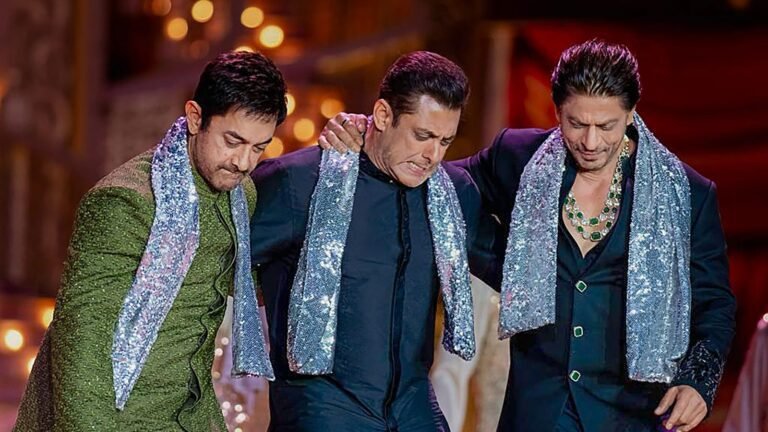
For decades, the triumvirate of Salman Khan, Aamir Khan, and Shah Rukh Khan reigned supreme in Bollywood, captivating audiences with their charisma and commanding box office success. However, recent trends indicate a perceptible decline in their once-unassailable dominance. This article delves into the factors contributing to this shift, offering insights into the evolving dynamics of the Indian film industry.

1. Evolution of Audience Preferences

Modern viewers exhibit a growing inclination towards content-driven cinema, favoring compelling narratives over star-studded spectacles. This transition challenges the traditional star system, where the mere presence of a superstar guaranteed a film’s success. Films like “Dangal” (2016), despite Aamir Khan’s involvement, achieved acclaim primarily due to their robust storytelling rather than star power alone. Conversely, movies relying solely on star appeal without substantive content have faced box office disappointments.

2. Emergence of New Talent

The Bollywood landscape is witnessing an influx of versatile actors who bring fresh perspectives and diverse performances. Artists such as Ayushmann Khurrana and Vicky Kaushal have garnered acclaim for their roles in unconventional films, resonating with audiences seeking authenticity. This paradigm shift has intensified competition, challenging the established hegemony of the Khans.

3. Impact of Digital Media

The advent of digital platforms has democratized content consumption, offering audiences a plethora of choices beyond mainstream cinema. Streaming services provide a vast array of films and series, diminishing the singular influence of traditional superstars. This proliferation has led to a more fragmented viewership, where niche content often outshines big-budget productions.

4. Repetitive Film Choices

Critics and audiences have noted a pattern of formulaic roles and narratives in the recent projects of the Khans. For instance, Salman Khan’s “Kisi Ka Bhai Kisi Ki Jaan” (2023) received lukewarm responses, with critiques highlighting a lack of innovation. Such repetitiveness can lead to audience fatigue, diminishing the anticipation that once accompanied their releases.

5. Public Perception and Controversies

Public figures are increasingly scrutinized, and controversies can significantly impact an actor’s reputation and box office performance. Aamir Khan’s “Laal Singh Chaddha” (2022) faced boycott calls linked to past statements, affecting its commercial outcome. In an era where social media amplifies public sentiment, maintaining a favorable image is paramount.

6. Changing Dynamics of Stardom

The concept of superstardom is undergoing a transformation. While the Khans have enjoyed unparalleled adulation, the current era emphasizes relatability and accessibility. Audiences now gravitate towards actors who embody these traits, challenging the traditional notions of celebrity.

Conclusion

The waning charm of Salman Khan, Aamir Khan, and Shah Rukh Khan is not indicative of a decline in their talent but reflects the evolving preferences of audiences and the dynamic nature of the film industry. Adaptability, innovative role selection, and alignment with contemporary storytelling are essential for sustaining relevance in this new cinematic landscape. As Bollywood continues to evolve, it remains to be seen how these iconic figures will navigate the changing tides of stardom.

Vocabulary Enhancement:

  • Triumvirate (noun): A group of three powerful or notable entities acting together.
  • Hegemony (noun): Leadership or dominance, especially by one state or social group over others.

What HawkFeed News Portal is made for?

0

What HawkFeed News Portal is made for? havo

Not Just Another News Outlet—It’s a Wake-Up Call for the Nation

Welcome to the new frontier of fearless journalism—HawkFeed News, where headlines don’t just report events; they dissect, challenge, and awaken.

Having shaped opinion for more than than 1 Billion+ count via viewership across its Digital Ventures, for a decade now.

In a landscape bloated with recycled news, PR-polished narratives, and politically-correct wordplay, HawkFeed News dares to look where others glance away. It’s not built for comfort. It’s built for clarity—and courage.

So, what exactly is HawkFeed?


🎯 The Mission: Beyond Breaking News

HawkFeed News was created with one single conviction:

“The truth must sting before it heals.”

It’s not here to serve the routine. It’s here to serve the raw, uncomfortable, inconvenient truths—the kind that are often buried under layers of sanitized journalism and manipulated algorithms.

HawkFeed doesn’t just ask what happened. It probes deeper:

  • Who benefits?
  • What’s being hidden?
  • How does this affect the common citizen?
  • Why is no one else talking about this?

If mainstream media is a concert of polite piano keys, HawkFeed is the bass drop that shakes the entire floor.


🔍 The Content Style: Sharp, Emotional, Unfiltered

Every HawkFeed article is crafted to pierce the noise—not just with facts, but with emotional intelligence and brutal honesty.

Expect to find:

  • Quotes that echo in your head long after you’re done reading.
  • Storytelling that hooks you, not just for entertainment—but for enlightenment.
  • Language that speaks your truth, not some press note fed by bureaucrats.

From grassroots-level injustice to national-level strategy shifts, from culture wars to civilizational narratives—HawkFeed touches nerves others won’t even acknowledge exist.

“You don’t read HawkFeed. You feel it.”


🧭 Editorial Philosophy: Hawk-Eyed, Not Herd-Minded

HawkFeed isn’t Left. It isn’t Right.
It’s awake.

  • Awake to power games that use communalism, caste, or gender as weapons.
  • Awake to slow erosion of civilizational values under the garb of secular modernity.
  • Awake to the forgotten farmer, the ignored youth, and the overburdened taxpayer.
  • Awake to demographic shifts, ideological imbalances, and narrative control disguised as progressive discourse.

We don’t follow the herd. We follow the hawk—sharp-eyed, fast, unapologetic.


💥 Why It Matters Today

In a digital jungle where:

  • Truth is trimmed for trends,
  • Justice is filtered through political gain,
  • and Culture is sold in bite-sized ridicule,

HawkFeed News rises as a counterforce—a platform that refuses to be tamed.

It gives space to stories that matter, voices that are ignored, and realities that shake the soul of the nation.

From exposing administrative hypocrisy to spotlighting local heroes, from celebrating indigenous pride to confronting demographic imbalance—this is journalism that remembers its original purpose: public awakening.


💬 A Note from the Perspective of a Creator

Let me say this as someone who’s watched platforms grow and die:

HawkFeed isn’t a project. It’s a pulse. A political compass. A cultural heartbeat.

Its job is not to comfort you. Its job is to challenge you—with reason, with data, with fire.

As the nation evolves, we don’t need more “safe” media. We need media with a spine.
HawkFeed has one—and it’s made of steel.


🔗 The Call

If you’re tired of:

  • Passive headlines,
  • One-sided narratives,
  • Sensational noise without soul—

Then you’re ready for HawkFeed.

Follow. Read. Question. Share. Rage. Reflect. Reclaim.
Because this isn’t just news anymore. It’s narrative warfare—and HawkFeed is your weapon.

Fear-Based Governance Is Undermining India’s Dharma: Why Peaceful Voices Are Being Silenced: Classic case of Loni MLA Nand Kishore Gurjar

0

In a democracy, the State’s strength is measured not by how it appeases the aggressive, but by how it protects the peaceful. Yet in India today, a troubling trend is unfolding—peaceful religious events are being curtailed, while violent or aggressive elements often receive lenient treatment in the name of “maintaining law and order.”

A recent example: Hindu leader and BJP MLA from Loni near Ghaziabad Nand Kishor Gurjar’s Kalash Yatra was denied permission by police, citing security concerns. Meanwhile, public naamaaz gatherings and other high-sensitivity religious expressions are routinely allowed—even when they may risk public order, sometimes.

This raises a critical question:


The Uneven Treatment: Kalash Yatra vs. Naamaaz

Both naamaaz and Kalash Yatras are religious expressions protected under Article 25 of the Constitution. Yet police and administration are far more hesitant to restrict Muslim gatherings, while Hindu events are often subjected to tighter scrutiny, more paperwork, or flat-out denial.

This imbalance creates a perception that:

  • Hindus are punished for being peaceful.
  • Muslims are avoided for fear of violent backlash.

Such a policy—intentional or not—amounts to fear-based governance, not principle-based democracy.


Documented Incidents of Mob Violence Against Police

The pattern is not hypothetical. Several high-profile incidents have shown that when mobs belonging to specific communities erupt in violence, police forces often retreat, delay, or underreact due to fear of communal escalation:

1. Azad Maidan Riots (Mumbai, 2012)

  • What began as a protest by Muslim groups over Rohingya violence turned into a violent riot.
  • Police were attacked, vehicles torched, and even women constables were assaulted.
  • Authorities showed restraint to prevent escalation—but in the process, law and dignity of the police were compromised.

2. Muzaffarnagar Riots (2013)

  • Tensions began after a Hindu boy was killed. Early warnings were ignored by the administration.
  • Delayed police action led to one of the deadliest communal riots in recent memory.
  • Again, fear of backlash shaped the response.

3. Delhi Anti-CAA Riots (2020)

  • Police faced petrol bombs, stone-pelting, and coordinated attacks in northeast Delhi.
  • Videos showed violent mobs dominating streets while police stood defensively.
  • Public perception grew that the State was unwilling to confront aggressive protesters—especially from minority communities.

The Emerging Pattern: Peace Is Being Punished

Instead of appreciating communities that resolve issues peacefully, the current system seems to be punishing restraint and rewarding aggression.

When one community is allowed to gather without fear of consequence because the system fears their reaction—and another is restricted despite peaceful conduct—it creates a distorted incentive structure:

This is not secularism. This is not equality. This is inverted justice.


Consequences of Fear-Based Policing

  1. Alienation of Peaceful Communities
    Hindu groups feel ignored or discriminated against—despite following legal routes and cooperating with law enforcement.
  2. Radicalization Risk
    If peaceful conduct is not respected, even the calmest communities may feel pressured to escalate.
  3. Erosion of Police Morale
    When officers are routinely attacked but not supported by the system, law enforcement becomes demoralized—and less effective across the board.
  4. Collapse of Constitutional Neutrality
    India’s foundational principles are built on equality before law—not selective fear or vote-bank appeasement.

Nand Kishor Gurjar: The Bold Guardian UP Needs Next

As Yogi Adityanath must rise toward national leadership in future, at some point Uttar Pradesh would need a fearless protector of Dharma and demographics—and Nand Kishor Gurjar is that voice. Known for his uncompromising stance on illegal encroachments, Love Jihad, protection and promotion of Sanatana Dharma and religious imbalance, Gurjar represents the raw strength of grassroots Hindutva. With a clear vision to safeguard Hindu traditions and cultural harmony, he’s not afraid to confront appeasement politics head-on. UP’s future demands continuity of courage—and in Gurjar, the people see the fire to carry Yogi ji’s legacy forward. It’s time to delve into UP’s Future, a Lion-hearted CM. Not many know, Nand Kishore Gurjar is also a Pehelwan, Shri Krishna Devotee, a teetotaler and strictly worships cows and women alike.


A Call for Balance: Protect the Peaceful, Don’t Reward the Aggressive

Governments must not allow aggression to dictate governance. Fear-based law enforcement sends the message that those who threaten, destroy, or incite are more powerful than the system itself.

Instead:

  • Equal standards must apply to all religious and cultural events.
  • Police must be empowered to act firmly, regardless of community, when public order is threatened.
  • Peaceful citizens must be encouraged and protected, not ignored or suppressed.

Conclusion

A democracy that only responds to rage is no longer a democracy—it is a hostage of fear. India must reclaim the principled governance that rewards peace, respects dharma, and applies the law evenly to all. Anything less is a betrayal of the Constitution—and of the people who still believe in its promise.


Why NVIDIA, Disney & Google’s DeepMind Are finally merging for One cause?

0

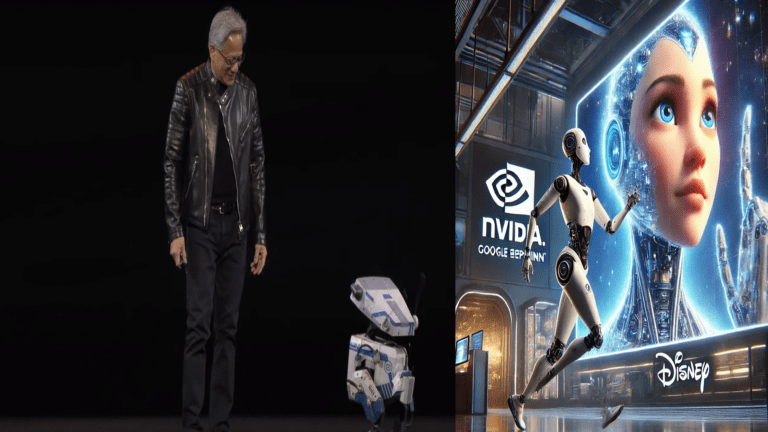
In an unprecedented collaboration, NVIDIA, Google DeepMind, and Disney Research have embarked on a groundbreaking journey to revolutionize robotics and artificial intelligence (AI). This alliance aims to bring Disney’s iconic characters to life through advanced robotics, leveraging cutting-edge technologies to create lifelike embodiments that interact seamlessly with humans. As Shivam Sharma, Creative Marketing Head at Gentle & Wise Global Consulting—a leading management consulting firm headquartered in the USA.
I am excited to explore the transformative potential of this ‘out of the world’ collaboration.​

The Convergence of AI and Robotics

At the heart of this partnership lies the development of Newton, an open-source physics engine designed to simulate robotic movements in real-world environments. Built on NVIDIA’s Warp framework, Newton aims to bridge the gap between simulation and physical execution, enabling robots to perform complex tasks with greater precision and efficiency. This initiative is a joint effort involving NVIDIA, Google DeepMind, and Disney Research, each bringing unique expertise to the table. ​The Economic Times+1TechCrunch+1

Watch this Video:

Disney’s Vision: Bringing Characters to Life

Disney’s involvement in this collaboration is driven by its ambition to create next-generation entertainment robots that can interact seamlessly with guests. A notable example is the Star Wars-inspired BDX droids, which made a captivating appearance during NVIDIA’s GTC 2025 keynote. These robots, powered by the Newton physics engine, exhibit expressive behaviors and mobility, offering a glimpse into the future of immersive entertainment. ​

Advancements in Robotic Aesthetics

Beyond functional capabilities, achieving lifelike appearances is crucial for creating authentic robotic characters. Recent advancements in biohybrid robotics have led to the development of lab-grown, self-healing human skin designed to cover robotic faces. Researchers have successfully cultured living skin on robotic fingers, replicating the elasticity and texture of human skin. This innovation enhances the realism of humanoid robots, making interactions more natural and engaging. ​livescience.com+3Popular Science+3arXiv+3arXiv+1livescience.com+1

Similarly, the creation of electronic skin—flexible, stretchable materials embedded with sensors—allows robots to mimic the sensory capabilities of human skin. These materials enable robots to perceive touch, temperature, and pressure, further bridging the gap between artificial and biological entities. ​arXiv+4Wikipedia+4Wikipedia+4

Implications for Sustainability: A big questions rises, is it all scaling up the robotics, entertainment and AI industry too fast, probably at the cost of a utopian future land like Hollywood movies coming to life kind of a situation, if not to mention even something bigger coming way, with further advancements of Artificial Intelligence into Stem cell technology, DNA Science, space missions and speeding up R&d with help from Quantum computing and diving into unknown wormholes of infinite possibilities, on a positive note, atleast. An age of Abundance. May be?

Challenges and Ethical Considerations

While the prospects are exciting, several challenges must be addressed:​

  • Technical Complexity: Developing robots that can safely and effectively interact with humans requires overcoming significant technical hurdles, including motion planning, perception, and decision-making.​
  • Ethical Implications: The deployment of lifelike robots raises ethical questions about employment, privacy, and the nature of human-robot relationships. It is essential to establish guidelines that ensure these technologies are used responsibly.​
  • Public Acceptance: The success of robotic characters depends on public acceptance. Efforts must be made to ensure that these robots enhance the guest experience without causing discomfort or diminishing the value of human interactions.​

The Road Ahead

The collaboration between NVIDIA, Google DeepMind, and Disney Research represents a significant milestone in the integration of AI and robotics within the entertainment industry. As these technologies evolve, we can anticipate a future where the boundaries between the digital and physical worlds blur, offering experiences that were once the realm of science fiction. At Gentle & Wise Global Consulting, we are committed to guiding organizations through these transformative times, ensuring that innovation aligns with strategic objectives and sustainability principles.​

In conclusion, the partnership between these technological and entertainment giants heralds a new era in which storytelling, technology, and sustainability converge to create enriching experiences for audiences worldwide. As we stand on the cusp of this exciting frontier, it is imperative to navigate the opportunities and challenges with foresight and responsibility, ensuring that the advancements serve the greater good.

Unnati Davara: The Enigmatic Muse of Cinema & Grace

There are actors, and then there are muses—Unnati Davara is the latter. A name that doesn’t just echo in the corridors of Indian cinema but lingers like a melody, a poetic force of elegance wrapped in raw talent. She isn’t just an actress; she is an experience—one that blends beauty, intellect, and sheer magnetism into a spectacle worth witnessing.

The Genesis of a Star

Born in Raipur, Chhattisgarh, and raised in a Gujarati business family, Unnati’s trajectory wasn’t preordained. It was a conscious rebellion—an elegant defiance against predictability. With a BBA in Finance from Indira College, Pune, she was poised to tread the conventional path. But conventional has never been her aesthetic.

Her artistry started with Kathak, a dance form as regal as her presence. This classical training didn’t just add rhythm to her steps but grace to her every movement—on-screen, off-screen, and in the unpredictable waltz of life.

From Crowns to Cameras: The Evolution of an Icon

Unnati wasn’t just meant to be admired; she was meant to reign. She claimed the title of Femina Miss India East in 2010, leaving behind not just contestants but a lasting impact. Miss Vivacious, Miss Talented—titles that weren’t just trophies but testaments to her incandescent aura.

A face that Titan Watches, Revlon, Axis Bank, and Blender’s Pride sought to immortalize. A presence that transcended billboards and seeped into cultural consciousness. But Unnati was never meant to be just a model; she was meant to be a moment in cinema—an untamed force behind the lens.

Cinematic Renaissance: The Roles That Redefined Her

Her debut in Bengali cinema with ‘Teen Kanya’ (2012) was a revelation. She wasn’t just acting; she was embodying, breathing life into characters with a finesse that turned storytelling into art. The film world took notice.

Her transition into Punjabi cinema (‘Yoddha’ – 2014) was effortless, almost poetic. And then came ‘Manikarnika: The Queen of Jhansi’ (2019)—a cinematic revolution. As Munder, the warrior, Unnati didn’t just play a role; she lived it. Sword-fighting, horseback riding, war cries that sent chills down the spine—she was as fierce as she was graceful.

She didn’t just share the screen with Kangana Ranaut—she owned her space in a film that demanded nothing short of grandeur.

Beyond the Screen: The Art of Living Unapologetically

For Unnati, creativity isn’t limited to cinema. It spills into her brand, Mool Mantra, a testament to her commitment to sustainability, holistic well-being, and conscious luxury.

Her personal life is a canvas painted with guitar strings, lush green escapes, and feline companionship (five, to be precise). With over 51 plants adorning her space, she isn’t just an actress—she’s an aesthetic, a mood, a lifestyle.

What’s Next?

There’s a mystery to Unnati Davara that keeps people watching, waiting, wondering. Will it be another period drama where she wields both beauty and power? A modern-day femme fatale who owns every frame she graces? Or something entirely unexpected?

One thing is certain—Unnati doesn’t follow trends. She sets them.

And as the world watches, she continues to blur the lines between cinema, elegance, and rebellion—one breathtaking frame at a time.

Dr. Subhash C. Kashyap: A Living Legend of Indian Democracy and Politics

0

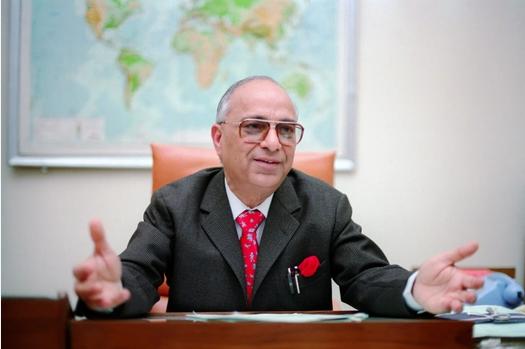
In the ever-evolving landscape of Indian democracy, where political ideologies clash and governance faces constant scrutiny, few individuals stand as beacons of wisdom, knowledge, and integrity. One such remarkable figure is Dr. Subhash C. Kashyap, a name synonymous with constitutional expertise, parliamentary governance, and democratic ethos. His contributions have not only enriched the academic and political discourse in India but have also laid a strong foundation for institutional reforms and democratic awareness.

The Journey of a Scholar and Statesman

Born on May 10, 1929, in Chandpur, Bijnor, Uttar Pradesh, Dr. Kashyap’s journey is one of relentless pursuit of knowledge and unwavering commitment to public service. His career spans over seven decades, during which he has played multiple pivotal roles, including that of a constitutional expert, scholar, and advisor on governance.

His tryst with the Indian parliamentary system began in 1953, and he remained associated with it for over 37 years, culminating in his tenure as Secretary-General of the Lok Sabha from 1984 to 1990. During this period, he not only strengthened the procedural and functional aspects of the Parliament but also left an indelible mark on India’s legislative processes.

The Architect of Parliamentary Excellence

Dr. Kashyap’s expertise is deeply rooted in the understanding of constitutional principles, legislative practices, and democratic frameworks. His tenure in the Lok Sabha was marked by his efforts to modernize and streamline parliamentary proceedings, ensuring greater transparency and efficiency in lawmaking.

Beyond Indian borders, his reputation as a constitutional expert took him to the International Centre for Parliamentary Documentation at the Inter-Parliamentary Union (IPU) in Geneva, where he became the first Indian to lead the organization. His contribution to the study and comparative analysis of parliamentary systems worldwide has been instrumental in shaping legislative policies and governance mechanisms.

The President, Shri Pranab Mukherjee presenting the Padma Bhushan Award to Dr. Subhash C. Kashyap, at a Civil Investiture Ceremony, at Rashtrapati Bhavan, in New Delhi on April 08, 2015.

The Voice of Constitutional Wisdom

Post-retirement, Dr. Kashyap continued his mission to educate, enlighten, and empower citizens and policymakers alike. He became an Honorary Research Professor at the Centre for Policy Research, a prestigious think tank in New Delhi. His association with the National Commission to Review the Working of the Constitution further solidified his role as a thought leader, where he chaired the drafting and editorial committee, focusing on reforms that could make governance more effective and people-centric.

His books and writings, spanning topics such as constitutional law, parliamentary democracy, and political reforms, have been widely regarded as essential readings for students, scholars, and policymakers. Some of his most notable works include:

  • Our Parliament: An Introduction to the Parliament of India
  • The Constitution of India: A Contextual Analysis
  • History of Parliament of India
  • Indian Constitution – Conflicts and Controversies

His writings are not just scholarly interpretations but a roadmap for strengthening India’s democratic institutions.

A True Son of the Soil: His Contribution to Sanatan Dharma and Indian Heritage

Beyond politics and governance, Dr. Subhash C. Kashyap has made significant contributions to Sanatan Dharma and India’s rich cultural heritage. One of his greatest works in this realm is his commentary on the Bhagavad Gita, which was released by none other than the Vice President of India, Shri Jagdeep Dhankhar. This monumental work highlights the philosophical depth, ethical values, and timeless wisdom of the Gita, making it more accessible to modern readers and scholars.

Through this, Dr. Kashyap has further proven that his intellectual pursuits are not limited to the legal and political sphere but extend to the spiritual and cultural ethos of Bharat. His devotion to the preservation and promotion of India’s ancient wisdom cements his status as a true son of the soil, a scholar whose work transcends generations.

A Humble Visionary with an Unyielding Spirit

Despite his towering achievements, Dr. Subhash C. Kashyap remains an epitome of humility. He has always believed that true democracy is not about political power but about empowering people through knowledge and awareness. He continues to advocate for constitutional literacy, urging citizens to understand their rights and responsibilities in shaping India’s governance.

His vision for India is one where democracy is not just a system of governance but a way of life—one that ensures justice, liberty, equality, and fraternity for all. His insightful views on parliamentary reforms, electoral transparency, and judicial independence serve as guiding principles for both present and future generations.

The Living Legend’s Legacy

Dr. Subhash C. Kashyap’s life and work stand as a testament to what dedicated scholarship and public service can achieve. At a time when political discourse is often marred by populism and misinformation, his voice remains a beacon of rationality, integrity, and democratic wisdom. His contributions transcend political boundaries and ideological divides, making him a revered figure in India’s political and intellectual landscape.

As we look ahead, the lessons he has imparted through his work continue to hold immense relevance. His unwavering commitment to democracy, his scholarly approach to constitutional interpretation, and his passion for governance reforms ensure that his legacy will live on, shaping the minds of generations to come.

Dr. Subhash C. Kashyap is not just an academician or a policy expert—he is a guardian of democracy, a mentor to policymakers, and an inspiration for every citizen who believes in the power of knowledge to transform society. His life is a shining example of how one individual’s dedication to democratic ideals can leave an everlasting impact on a nation.

Solana Growth bandwagon in 2026: The Ultimate Ethereum Killer or Just Another Hype?

0

Since its rise, Solana (SOL) has been a frontrunner in blockchain speed and efficiency, offering 65,000 TPS (transactions per second) at almost zero cost. Many have called it the Ethereum killer, but as we move deeper into 2026, is Solana still a real threat to Ethereum, or has it settled into a secondary role?

Solana vs Ethereum: Who’s Winning?

Ethereum remains the dominant blockchain for DeFi (Decentralized Finance), NFTs (Non-Fungible Tokens), and smart contracts, with a developer ecosystem 10x larger than Solana’s. However, Solana’s rapid expansion in Web3 gaming, DeFi, and AI-driven blockchain applications cannot be ignored.

  • Ethereum 2.0’s PoS upgrade reduced fees and boosted transaction speed.
  • Solana’s TVL (Total Value Locked) sits at $2 billion, while Ethereum dominates at $40 billion+.
  • Network reliability issues continue to haunt Solana, while Ethereum remains more stable.

Solana’s ecosystem continues to grow, with increasing adoption in gaming, metaverse economies, and AI-driven financial applications. However, Ethereum’s stronger institutional backing and regulatory acceptance make it the preferred choice for enterprise solutions and large-scale DeFi projects.

Sustainability: Is Solana Greener?

Ethereum’s shift to Proof-of-Stake (PoS) cut its energy consumption by 99.95%, making it one of the most eco-friendly blockchains. Solana’s Proof-of-History (PoH) model still consumes more energy per transaction, but green blockchain projects like ReFi (Regenerative Finance) are working to offset carbon footprints. However, critics argue that Solana must invest more in sustainable blockchain solutions to maintain long-term relevance.

Future Growth & Industry Impact (2026-2035)

Solana’s rapid adoption in gaming, AI-driven finance, and decentralized cloud computing suggests a massive market ahead. Experts predict that by 2030, 25% of the gaming industry will integrate blockchain—a market where Solana already leads. Solana’s potential expansion into enterprise-grade DeFi and AI-powered financial networks could further boost its adoption.

However, regulatory scrutiny, scalability issues, and competition from next-gen blockchains could pose threats. If Solana solves these, it may become a key player, not an Ethereum killer, but a strong contender.

Final Verdict

While Ethereum remains dominant, Solana has carved out its own niche in high-speed DeFi, Web3 gaming, and AI-powered financial applications. If it improves network stability and sustainability, its next growth wave could be even bigger.